Backstage Pass to North Dakota History

This blog takes you behind the scenes of the State Historical Society of North Dakota. Get a glimpse at a day-in-the-life of the staff, volunteers, and partners who make it all possible. Discover what it takes to preserve North Dakota's natural and cultural history.

Adventures in Archaeology Collections: Not Your Typical Maul

In the lab the volunteers continue to work with artifacts from On-A-Slant Village (32MO26), a Mandan earthlodge village site located at what is now Fort Abraham Lincoln State Park. Recently, volunteer Diana came upon this large grooved maul while rebagging artifacts.
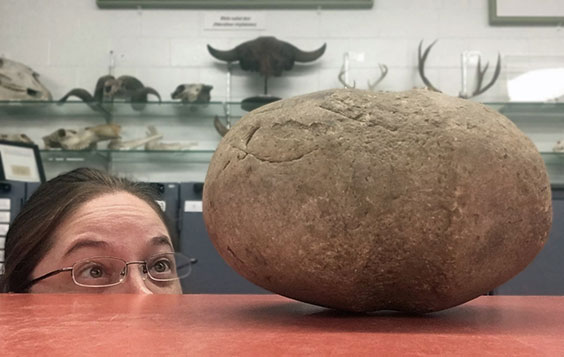
A woman wearing glasses peeks above an orange table at a large rock

The largest grooved maul that I have seen (so far) in the North Dakota archaeology collections. SHSND AHP 83.442.71.1
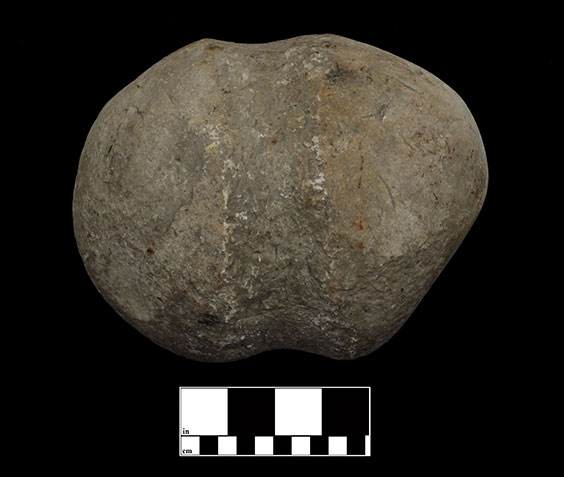
A large rock with a groove in the middle

Another view of the massive grooved maul from On-A-Slant Village (32MO26). SHSND AHP 83.442.71.1

Grooved mauls were so widely used in the past that they are often found throughout what is now North Dakota. They have been discovered by archaeologists in contexts belonging to every period of the state’s history. These tools are heavy-duty hammers. They can potentially be utilized for a variety of purposes—from cracking large bison bones to extracting marrow for cooking broth or making pemmican to driving posts or stakes into the ground.

The diameter of this specific maul is visibly bigger than most grooved mauls—the volunteers in the lab and I were all surprised when we saw it. The circumference of the central groove is 18 inches (45.72 cm), and it is even wider on either side of the groove. Despite its circumference, it isn’t too long at 7 7/8 inches (about 20 cm). But it is quite heavy and weighs 14.5 pounds (6.6 kg).

Grooved mauls do come in quite a variety of sizes. But we are not exactly sure why this one is so hefty. For comparison, a still large but more usual-sized example also from On-A-Slant Village (second from right in the photo below) weighs 6 pounds (2.8 kg).
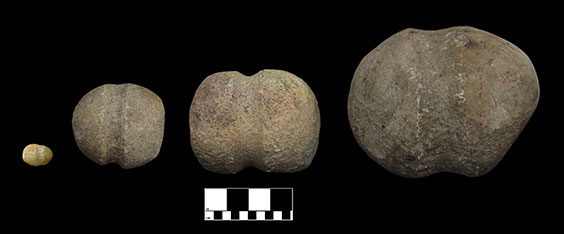
Four varios sized rocks with grooves in the middle are lined up from smallest at left to largest at right

Here are examples of grooved maul sizes ranging from unusually small (far left) to the extraordinarily large maul discussed in this blog (far right). The two mauls in the center are more typical sizes. SHSND AHP 10168, 83.442.71.11, 83.442.71.9, 83.442.71.1

Mauls are made by grinding or pecking a groove around an ovoid stone. The groove near the center is typically used for attaching the maul to a handle.
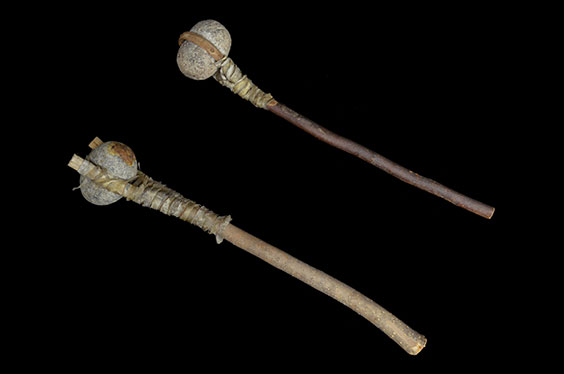
Two rocks with grooves in the middle are shown in their wooden hendles that would be used as mauls

Two different examples of replica grooved mauls attached to handles. SHSND AHP Educational Collection

So far, this huge grooved maul has not been analyzed. And we don’t know exactly how it was used—although wielding it would be quite a workout! However, it almost certainly was used by someone since one end is slightly battered and worn.
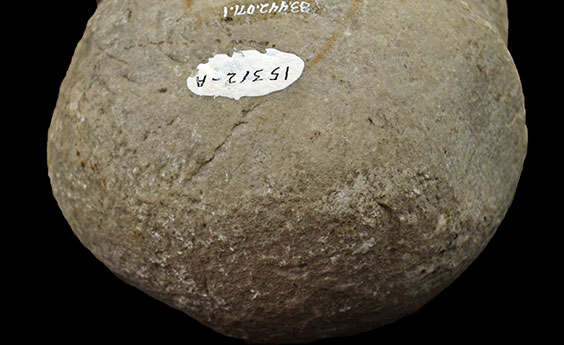
A large rock with a battered end is shown. There is a spot of white paint on it with 15312-A written in black ink on the white paint.

A close-up of the end of the maul showing evidence of use—this end is battered and appears to be pocked. SHSND AHP 83.442.71.1
Adventures in Archaeology Collections: Current Volunteer Projects

The volunteers are back in the lab! Work in the archaeology lab with volunteers was temporarily placed on hold in October 2020 due to COVID-19 concerns. It is wonderful to have them around again—we really appreciate all their hard work and dedication.

Welcome back volunteers sign with green and yellow streamers on the sides

We are so excited to have the volunteers back in the lab again!

Here are just a few projects currently underway thanks to their help.

Most of our archaeology lab volunteers regularly assist us in rehousing artifacts. We are always learning about better ways to store collections, and some of the packaging materials used in the past need to be replaced. As this happens, artifacts are removed from non-archival storage materials such as old acidic paper bags and boxes or plastic baggies that chemically off-gas over time. The artifacts are then re-wrapped or packaged in acid-free materials and bags that won’t off-gas. At the moment, we continue our work to rehouse collections from On-A-Slant Village. (For more information about this effort, check out past blogs about some of the artifacts and pottery from On-A-Slant.)

A brown paper bag that reads 83.442.004.23 (arrow pointing to the right) 111 P.001 decorated rimsherds
An older bag of pottery rim sherds from On-A-Slant Village (32MO26) waiting to be replaced with an archival bag.

The volunteers are also re-bagging and re-boxing pottery, animal bone, and more recent historic artifacts from the Ben Standing Soldier site. The site was excavated in 1965 as part of the River Basin Surveys—a large project that attempted to record important places along the Missouri River before they were flooded due to dam building. The Ben Standing Soldier site includes an earthlodge village as well as a more recent 1900s homestead.

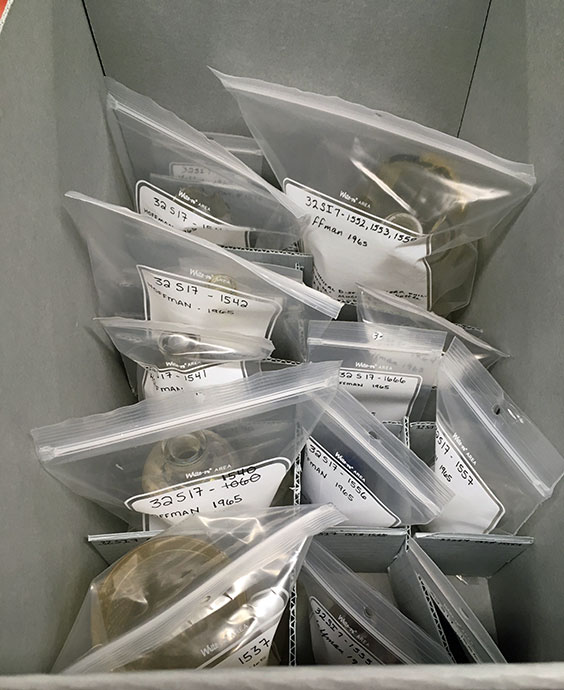
The inside of a gray box is shown with many ziplock bags containing glass bottles

A box of glass bottles from the Ben Standing Soldier site (32SI7). These have been re-bagged, boxed, and are ready to be put back in storage.

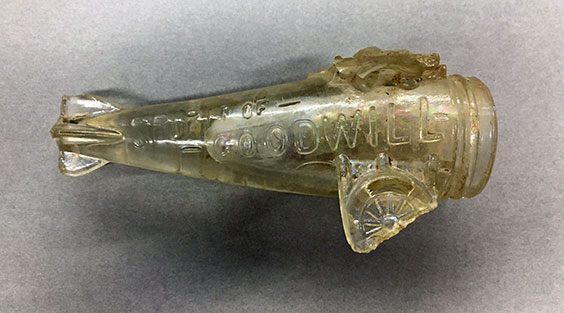
Among the more curious finds at the homestead were the remnants of this glass bottle seen below. It was shaped like an airplane—originally it had a figure of the aviator Charles Lindbergh in the cockpit and likely contained candy. (A more complete example of this type of bottle can be found on the website for the Brooklyn Museum.)

Part of a glass bottle that resembles an old airplane has goodwill etched into it

A bottle fragment from the homestead at the Ben Standing Soldier site (32SI7). SHSND AHP Field Catalogue No. 1564

One of our volunteers helps us by photographing artifacts. Currently we are photographing the artifacts from On-A-Slant Village that other volunteers have re-bagged.

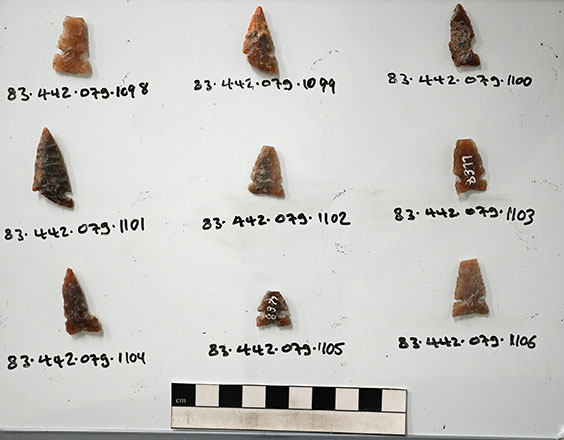
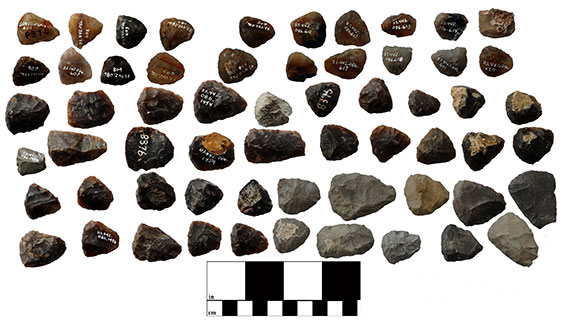
9 projectile points of varius sizes and shades of brown/red are displayed with their collection number written below each.

These projectile points are all from On-A-Slant Village (32MO26). This quick photo will be used in our database—we often clean up images such as these and use them for presentations, posters, and more. SHSND AHP 83.442.79.1098-1106

These photos will be used in many ways. Most artifact photos are attached to entries in our database—this helps with identifying objects for researchers and tracking the condition of the artifacts for storage and display. Photos by our volunteers also get used for blogs, posters, and exhibits. (For more on past photography projects carried out with the assistance of our volunteers, visit this blog.)

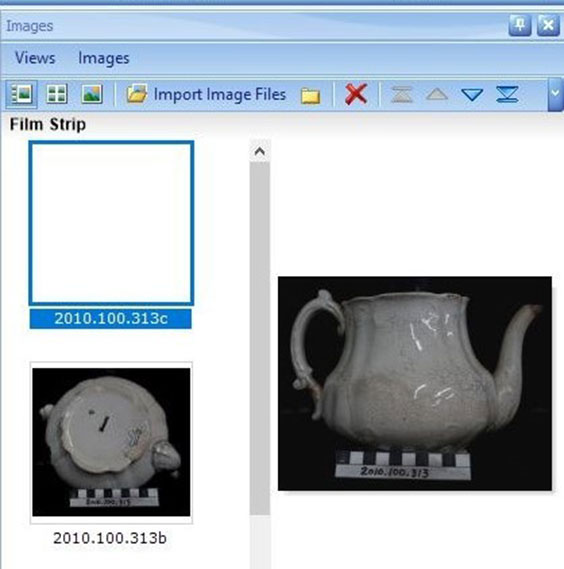
A file viewer with blue menus, small  boxes where image thumbnails would be displayed down the side, and an area to the right display a larger image. The larger image that is displayed is a white teapot.

This is a screenshot of images attached to an entry in our database. The teapot is from the site of Winona, North Dakota (32EM211). SHSND AHP 2010.100.313

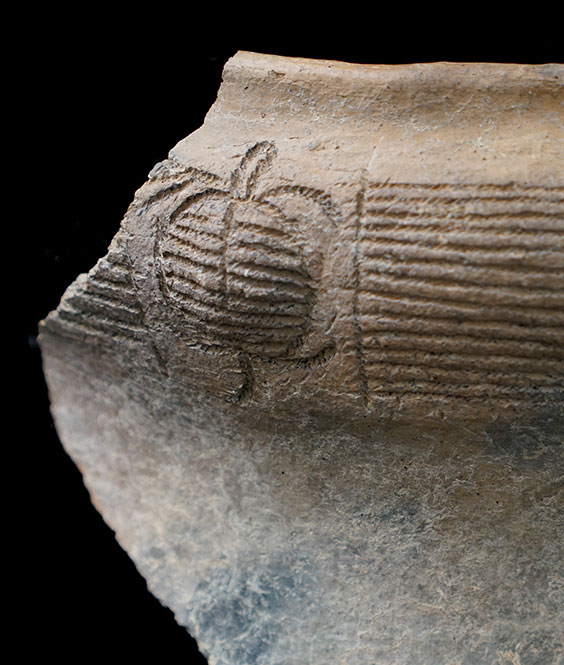
A broken piece of pottery depicting a turtle effigy

This photo detail of a turtle effigy on a pottery rim sherd was taken by one of our volunteers. The image is currently part of the "Small Things Considered" exhibit in the Merlan E. Paaverud Jr. Gallery at the State Museum. The sherd is from On-A-Slant Village (32MO26). SHSND AHP 7372

To all our lab volunteers, welcome back and thank you for all the work you do!

Adventures in Archaeology Collections: Scattered Village Ceramics, Paleo Points, and an Archaic Donation

A variety of things are always happening in North Dakota’s archaeology collections. Here are just three highlights from the past few months.

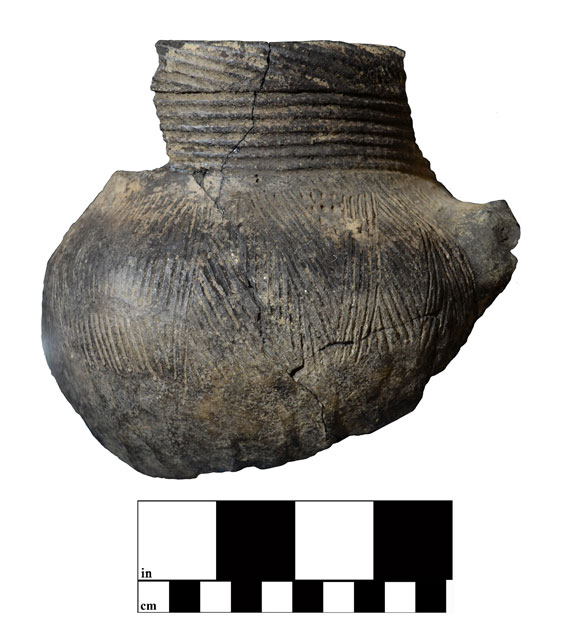
In November, I went with several other staff to help deinstall the Scattered Village display at the Mandan Public Library. Scattered Village (32MO31) was a Mandan village. Part of the current city of Mandan is now located on top of this archaeological site. Some of the village was excavated during street work in the 1990s, and the artifacts on display are from that project. The ceramics are a lot of fun to look at up close. For instance, there is an animal effigy on this large pot fragment.

A dark brown piece of broken pottery with horizontal lines at the top and angled lines throughout the rest of it.

A reconstructed straight rim pot with an animal effigy from Scattered Village (32MO31). SHSND AHP 99.10.V9.302.2740

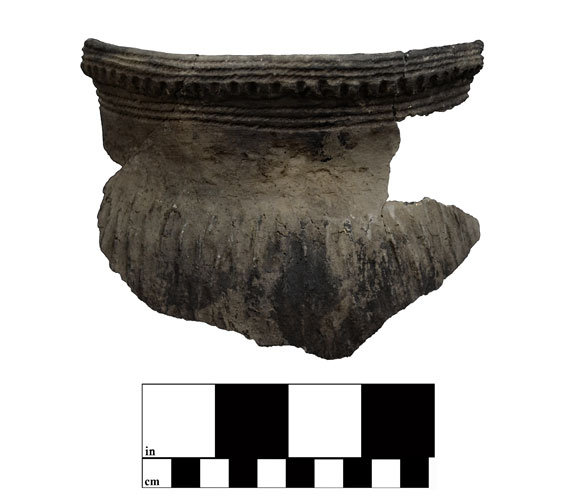
This vessel fragment below is elaborately decorated—you can see the marks from the paddle used to shape the vessel on the lower part, while the top part is decorated with cord-and-tool impressions.

A dark brown piece of broken pottery with thin horizontal lines surrounding thicker vertical lines at the top

A reconstructed Knife River ware rim with cord-and-tool impressions from Scattered Village (32MO31). SHSND AHP 99.10.V2.278.2935

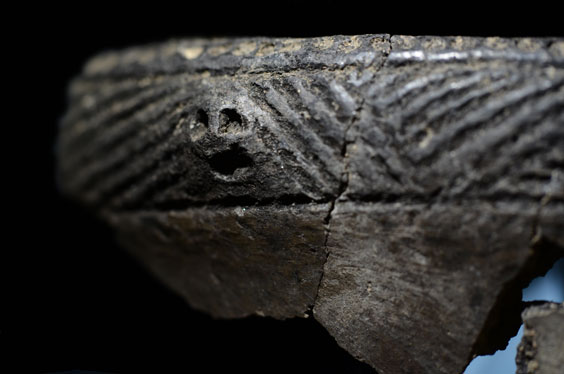
I also can’t help but like the tiny face on this rim sherd pictured below.

A close up of the top of a piece of broken pottery. It is dark brown with angled lines and a face.

Detail of a face-like effigy on a Le Beau ware rim from Scattered Village (32MO31). SHSND AHP 99.10.V6.256.2932

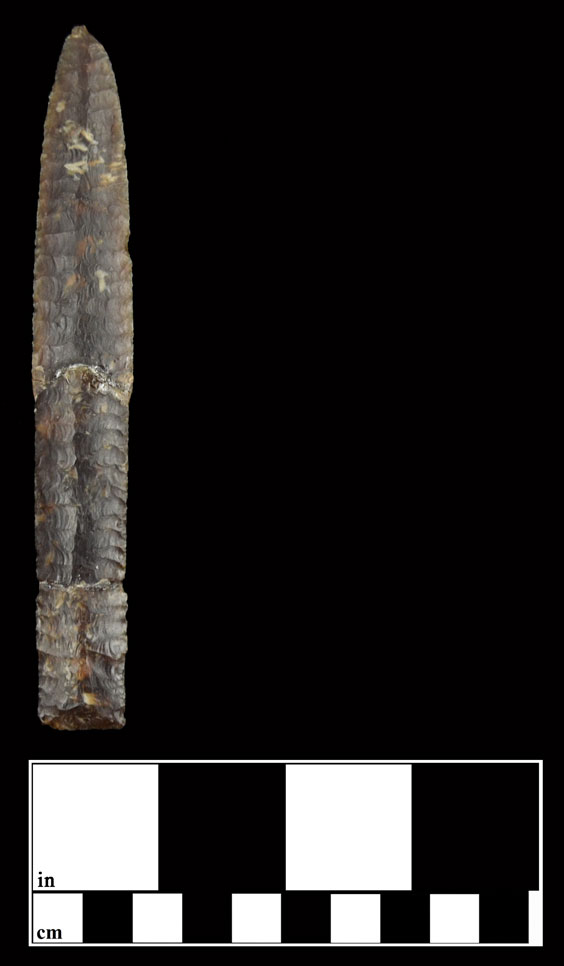
Another highlight was a donation of Paleoindian projectile points from a site in McLean County (32ML1350). The points in this collection are around 9,000 years old. They are very finely made, and the edges are still rather sharp. This kind of point is called an Eden point; it is made from Knife River flint.

An amber and brown colored projectile point

An Eden projectile point, made of Knife River flint, from 32ML1350. SHSND AHP 2020A.3.47

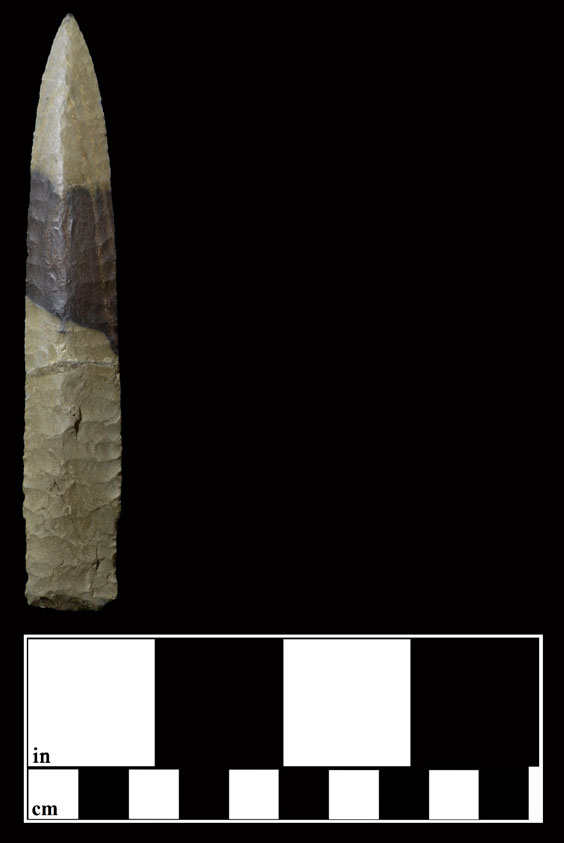
This Eden point, below, is made from porcellanite.

A tan colored projectile point with a dark brown section spanning the width of it in the upper middle portion

A porcellanite Eden projectile point from the McLean County site (32ML1350). SHSND AHP 2020A.3.44

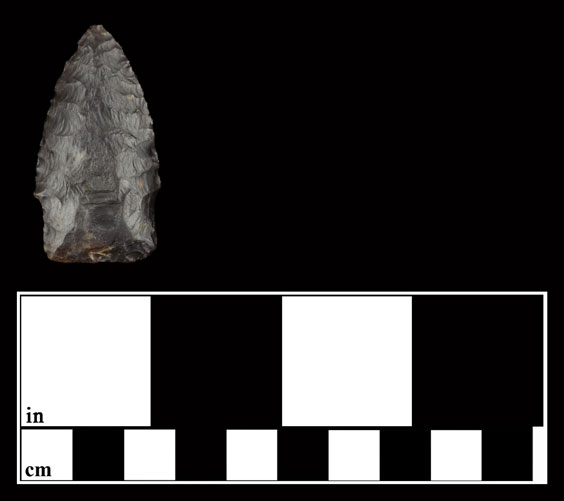
This is a Scottsbluff projectile point. It is also made from Knife River flint.

A dark brown projectile point that looks quite short

A Scottsbluff projectile point made of Knife River flint from 32ML1350. SHSND AHP 2020A.3.41

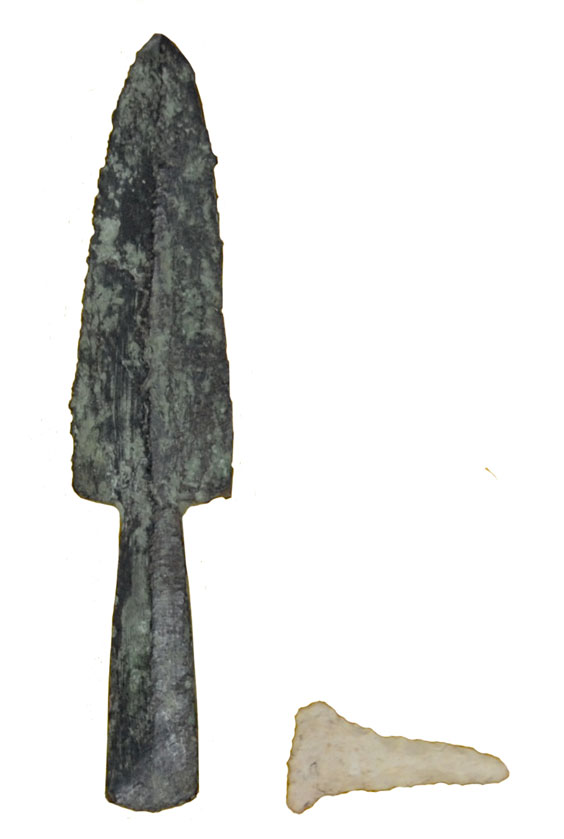
Another fascinating donation came from southeastern North Dakota. We were excited to receive it since we don’t have many collections from that part of the state. It includes several large trays of projectile points, drills, and other objects.

A dark gray drill made out of stone and a tanish colored point that looks similar to a long tooth

This copper point and stone drill are from southeastern North Dakota. SHSND AHP Maercklein Collection

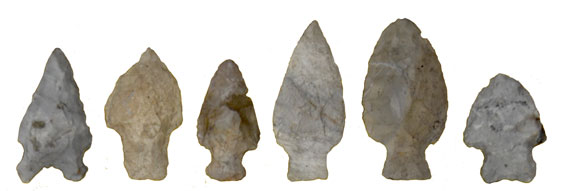
Many of the points, including the one above, are from the Archaic period, which lasted from approximately 5500 B.C. to 400 B.C.

Six projectile points are lined up in a row. The first three are similar in height with the next two being taller and the last one shorter. The colors in order of the points are gray, tan, tan, tan and gray, tan and gray, and gray.

Here are a few of the many projectile points from this donation. We so appreciate the generosity of these donors. SHSND AHP Maercklein Collection

Adventures in Archaeology Collections: Pottery from On-A-Slant Village

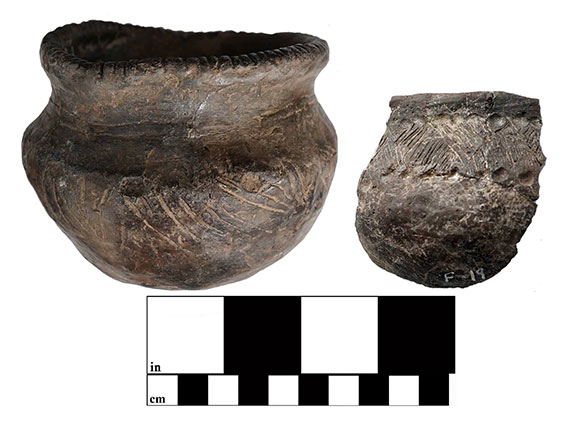
The volunteers and I are back in the archaeology lab, and we continue to work on rehousing artifacts from On-A-Slant Village (32MO26) at Fort Abraham Lincoln State Park near Mandan (for more about On-A-Slant Village, see http://blog.statemuseum.nd.gov/blog/adventures-archaeology-collections-…). There are many boxes of ceramics from this site. We are enjoying the variety of quality, sizes, and designs. Traditionally, Mandan potters were women. Here are just a few examples of the pottery that they made. The pottery is found in a variety of sizes. There are a few small decorated vessels like these.

artifact detail

Incised lines and finger or tool impressions are visible on these small pots from On-A-Slant Village (83.442.6.2, 451; photo by David Nix)

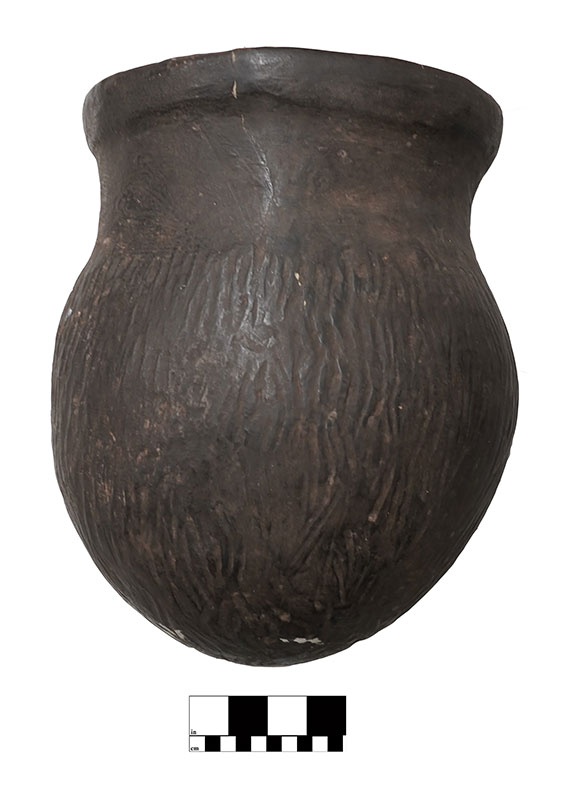
There are also large pots like this.

artifact detail

Incised lines and finger or tool impressions are visible on these small pots from On-A-Slant Village (83.442.6.2, 451; photo by David Nix)

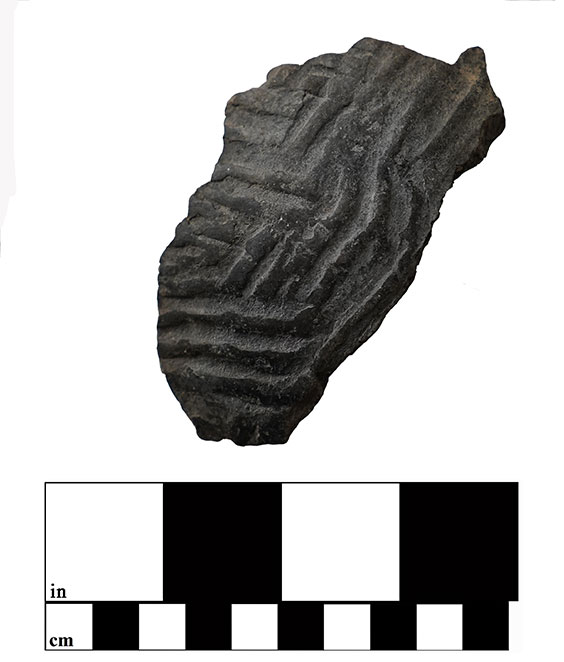
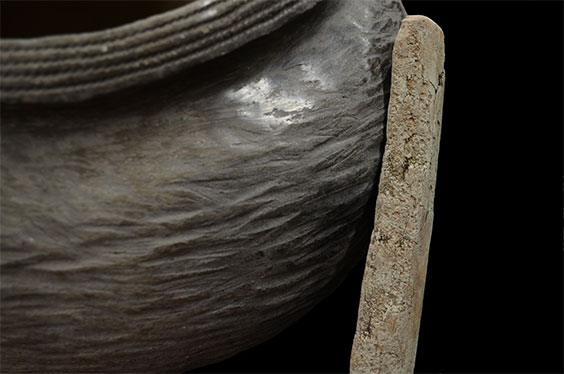
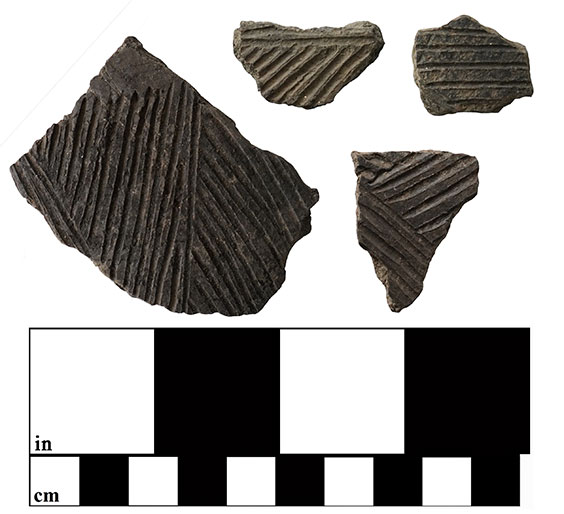
This example is undecorated, but we know it was shaped using a paddle because you can see marks (called simple-stamping) on the body of the pot. There are many examples of simple-stamped sherds from On-A-Slant—here is a close-up of another simple-stamped sherd.

artifact detail

A simple-stamped body sherd from On-A-Slant Village (83.442.2.59; photo by David Nix)

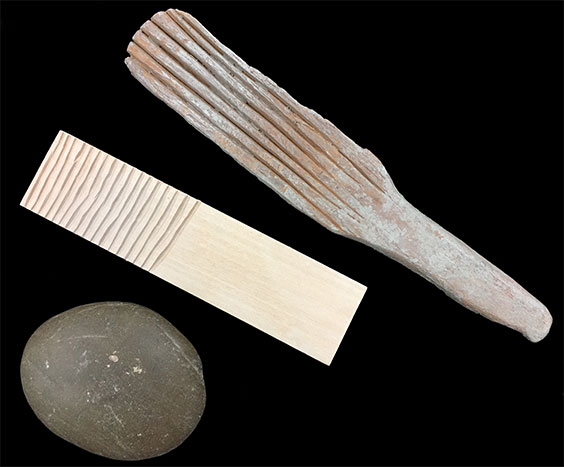
The paddles used to shape the pots had grooves like these examples from our educational collection.

artifact detail

Replica pottery anvil stone and two replica simple-stamp paddles (SHSND AHP educational collection)

To shape the pot, the potter held a smooth stone (called an anvil) on the inside of the pot while she used the paddle on the outside of the pot.

artifact close up

A replica pot and paddle tool (replica pot by Wade Haakenson, paddle from the SHSND AHP educational collection)

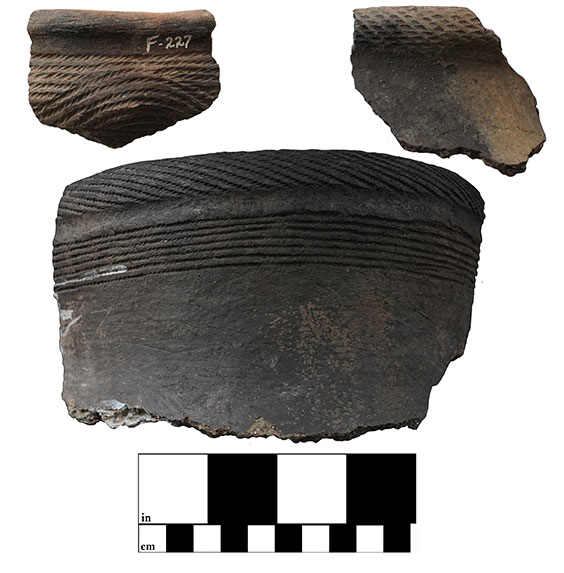
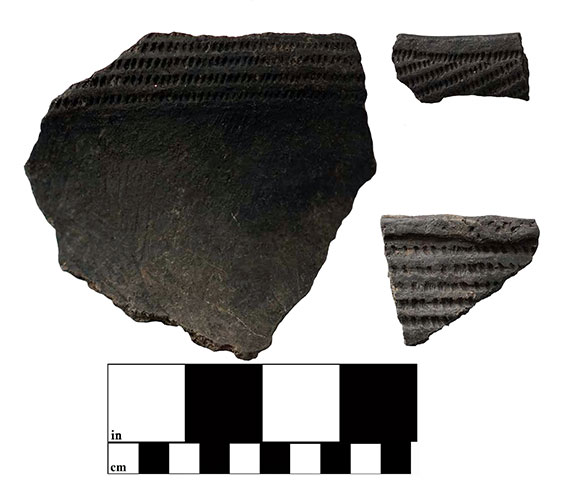
Much of the decorated pottery from On-A-Slant Village is decorated with cord impressions that come in a variety of patterns and designs.

artifact details

Cord impressed rim sherds from On-A-Slant Village (83.442.4.707, 1321, 807)

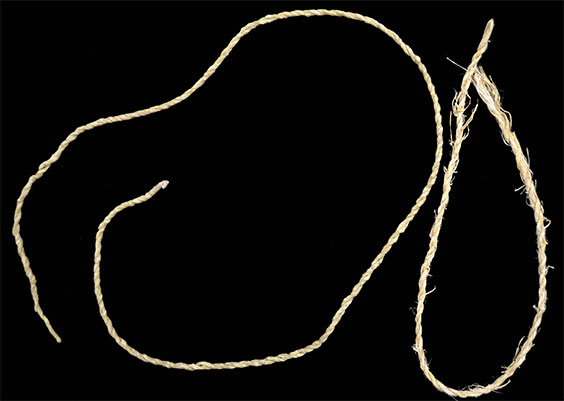
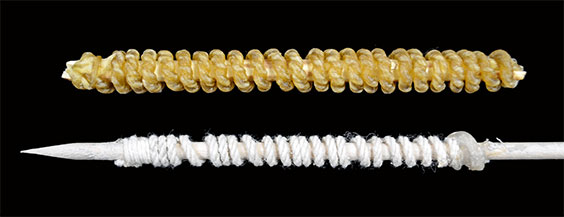
The potter used cords similar to these to decorate the pottery.

artifact details

Replica cords – the one on the left is made from sinew, the one on the right is made from plant fiber (SHSND AHP educational collection)

There are also many sherds with incised or trailed designs.

artifact details

Incised sherds from On-A-Slant Village (83.442.2.123, 132, 133, 134; photos by David Nix)

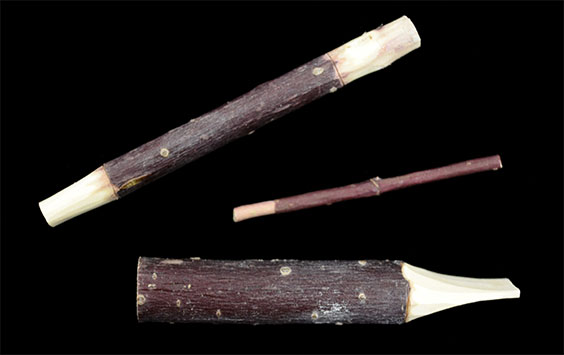
A stick could be used as a tool, or it could be carved to create different kinds of lines in the clay.

artifact detail

Stick tools (SHSND AHP educational collection)

Similar tools could be used to make impressions in the clay as well. My favorite kind of decorations are impressions made by cord-wrapped stick tools. These interesting tools make designs that look like this.

artifact details

Cord wrapped stick impressed sherds from On-A-Slant Village (83.442.4.1530, 747, 913; photos by David Nix)

artifact detail

Replica cord-wrapped-stick tools (SHSND AHP educational collection)

I also enjoy the really fancy designs like this one.

artifact detail

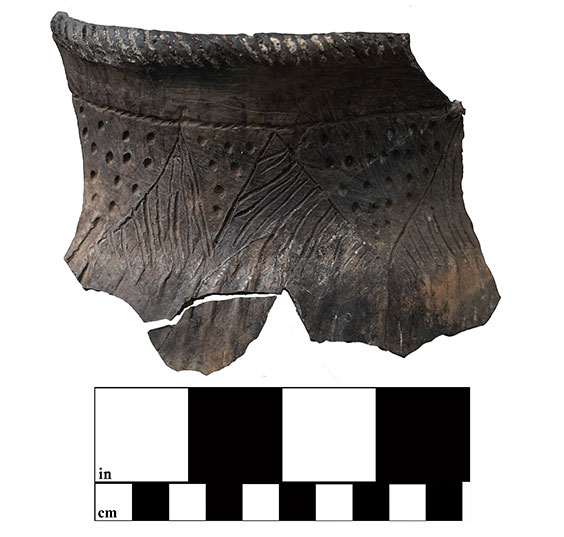
There are many kinds of decoration on this rim sherd from On-A-Slant Village (83.442.4.799; photo by David Nix)

This pot has almost everything—cord impressions along the rim and under the rim along the neck, tool impressions (the round dots), incised lines, and ridges from shaping the pot using simple-stamping (visible along the broken edge of the pot).

Adventures in Archaeology Collections: On-A-Slant Village

We are currently* working on rehousing and photographing artifacts from On-A-Slant Village (32MO26) with the volunteers in the archaeology lab. On-A-Slant was a Mandan earthlodge village. It was lived in for more than two hundred years, until the late 1700s. If you visit Fort Abraham Lincoln State Park near Mandan, you can still see the village site.

Here are just a few of the artifacts from On-A-Slant that the volunteers have helped photograph and repack so far.

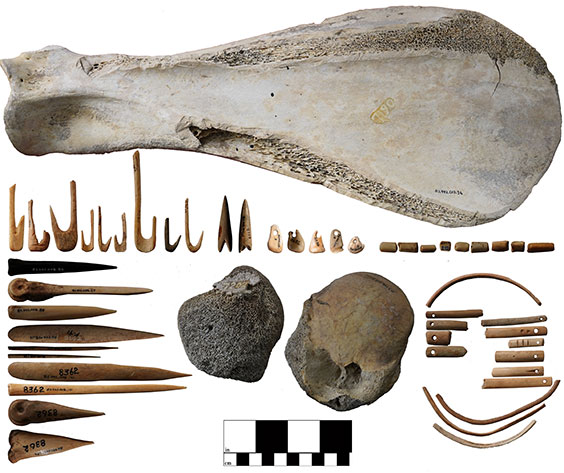
The bone tools really inspired this project—there is a wide variety of types of artifacts—fishhooks, beads, gaming pieces, fleshers and grainers for working hides, awls for leather work, hoes for gardening, and much more. A researcher visited last year to examine this collection. It is always exciting when a researcher visits, because it gives us a chance to explore our collections in depth. So when the researcher was done, Division Director Fern Swenson suggested we start photographing the artifacts from On-A-Slant and repack them in archival materials.

collection of bones with a size ruler

Just a small selection of the many different bone artifacts from On-A-Slant Village. Top Row: bison scapula hoe; Middle Row, left to right: fishhooks, antler projectile points, elk tooth pendants, tube beads; Bottom Row, left to right: awls, hide grainers, bracelet fragments (SHSND AHP 83.442.13.36; 83.442.21.2, 5-6, 11-13, 16, 32, 35; 83.442.42.5, 13; 83.442.19.1-2; 83.442.41.23-25, 41-45, 53-55, 72-73, 143; photos by David Nix)

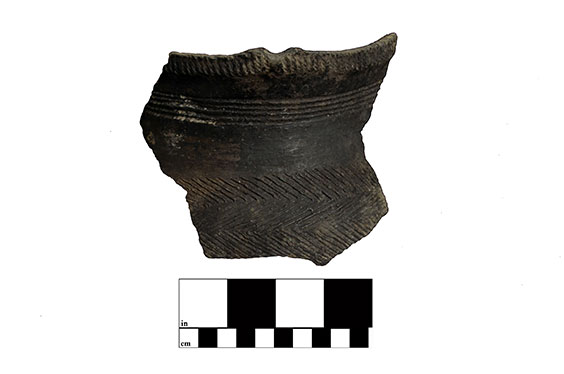
There is large quantity of pottery from On-A-Slant, and the sherds also show a lot of diversity—from solid thick pieces to thin delicate sherds. This medium-sized example is just one of many beautiful rim sherds.

pottery shards

Volunteer David C. repacked this sherd from On-A-Slant (SHSND AHP 83.442.4.1272)

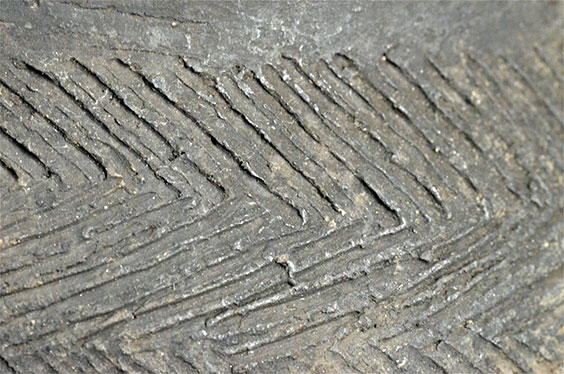
There are cord impressions along the top edge and around the neck. The lower part of the sherd (the shoulder) has incised zigzags. The pattern work on this vessel is amazingly straight and even—the potter had a very skilled and steady hand.

pottery shard detail

Here is a close-up of the evenly made lines on the same sherd as above (SHSND AHP 83.442.4.1272)

Like many other village sites in North Dakota, there are also a lot of chipped stone tools. Scrapers don’t always get a lot of attention—they are a very common kind of tool. Scrapers were used for processing hides and skins for clothing, blankets, shelter, and more. However, the sheer number of scrapers from On-A-Slant demonstrates the importance of hide processing—there are thousands of scrapers from On-A-Slant. These represent a lot of hard work. Can you imagine scraping off an entire bison hide using these?

collection of scrapers

These are just a few of the thousands of scrapers that David Nix has generously photographed for us (SHSND AHP 83.442.86.601-620, 1451-1460, 1481-1500, 2011-2020; photos by David Nix)

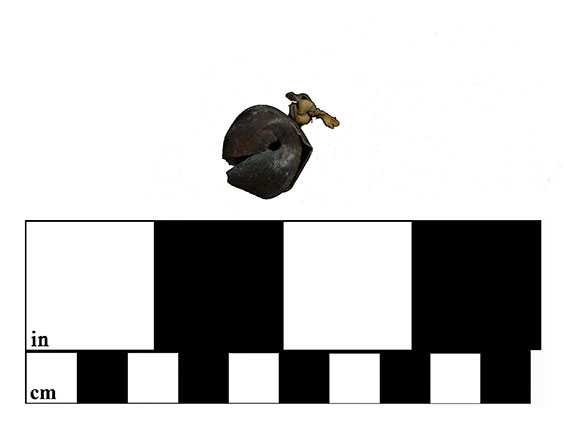
We have not handled very many metal artifacts from On-A-Slant so far. This small bell is one of the few metal items we have repackaged. If you look closely, you can see a piece of leather still carefully tied around the bell’s suspension loop.

Metal bell

Volunteer Steve found this bell--complete with a leather strap tied around the loop. Both Steve and I think this is an interesting artifact because leather doesn’t survive very well in North Dakota, so we don’t see it very often in our archaeology collections (SHSND AHP 83.442.92.90)

Many (many!) thanks to all the volunteers who have dedicated so many hours to working on this project so far: Diane, David C., David N., Janet, Marshall, Mary, Michelle, Mikayla and Mikaylah, Sandra, Susan, Steve, and Wendy.


*Due to the current Covid-19 situation, volunteering is temporarily on hold. However, if you are interested in joining us when we resume, please let us know! Contact Visitor Service Coordinator Beth Campbell (bcampbell@nd.gov), a copy of the volunteer application form can be found at https://www.history.nd.gov/pdf/volunteerformonline.pdf.

Adventures in Archaeology Collections: Squash

Pumpkins seem to be everywhere this time of year — jack-o’-lanterns in October, pies in November, and flavored lattes in coffee shops all the way through the new year. What we call pumpkins in the United States are squash. And while the current pumpkin-flavored options might be new and trendy, squash are not new to North Dakota.

The Mandan, Hidatsa, and Arikara people living along the Missouri River have grown squash for a very long time. The northern plains are not the easiest place to grow things — winters are long and cold while summers are usually short, hot, and dry. But Native gardeners developed and grew squash that survive in this climate. Traditional kinds of squash come in many shapes, sizes, and colors.

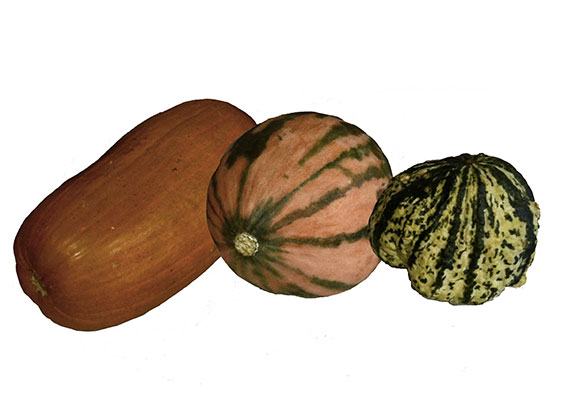
three pieces of yellow squash

Replicas of traditional varieties of squashes grown on the northern plains, left to right: Omaha pumpkin, Arikara winter squash, Mandan-Arikara green and white squash (SHSND 841.2, 37, 22). These are on exhibit in the State Museum’s Innovation Gallery.

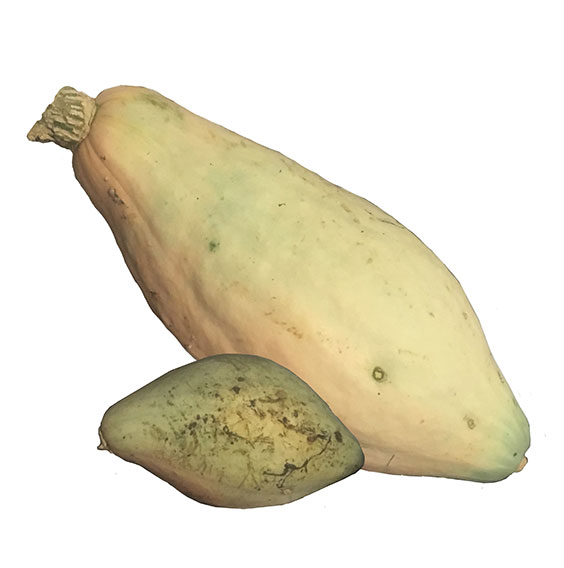
Many of these squashes are still grown today, like these Arikara winter squashes.

two squash, yellow and green

A winter variety of Arikara squash I grew in my garden this year

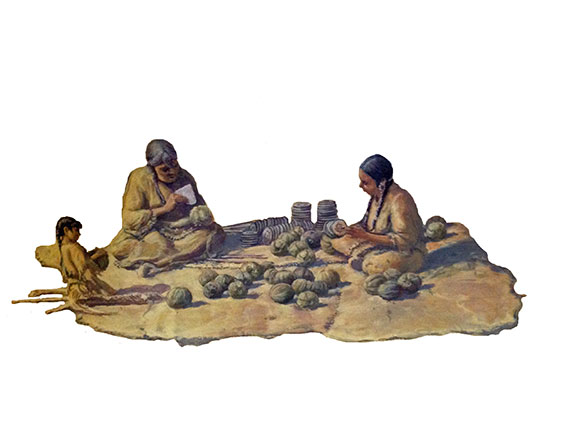
Traditionally, women grew squash in large gardens. Squash was an important food crop along with corn, beans, and sunflowers.

illustration of two native american woman preparing squash

Two women and a child processing squash together — detail from the cyclorama of Double Ditch Indian Village in the State Museum’s Innovation Gallery. (Original art by Rob Evans)

Some squash was eaten fresh. Dried squash was used in soups, stews, and other dishes. Squash was cooked many ways — boiled or steamed in a pot, roasted in the ashes of a fire, or boiled with other ingredients like squash blossoms, fat, beans, or cornmeal. Squash seeds could be boiled, parched, or roasted. Squash blossoms were also used in dishes either fresh or dried.

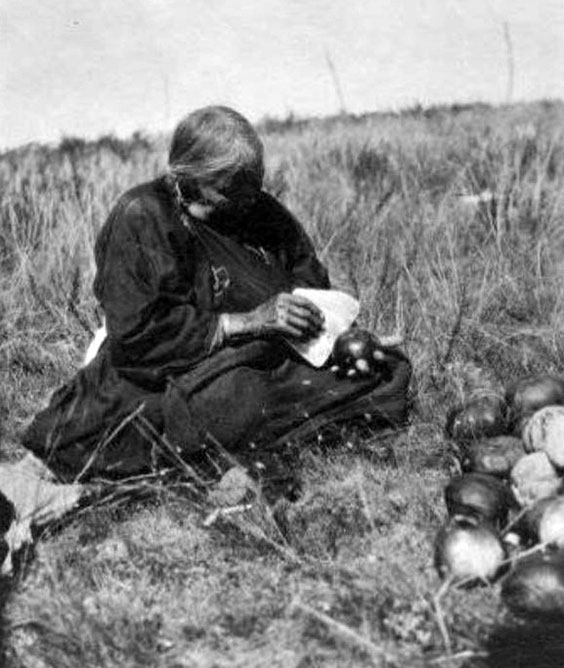
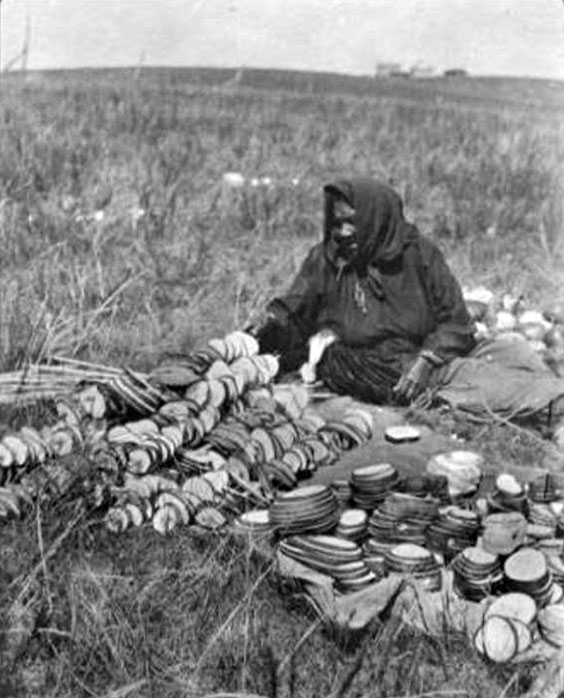
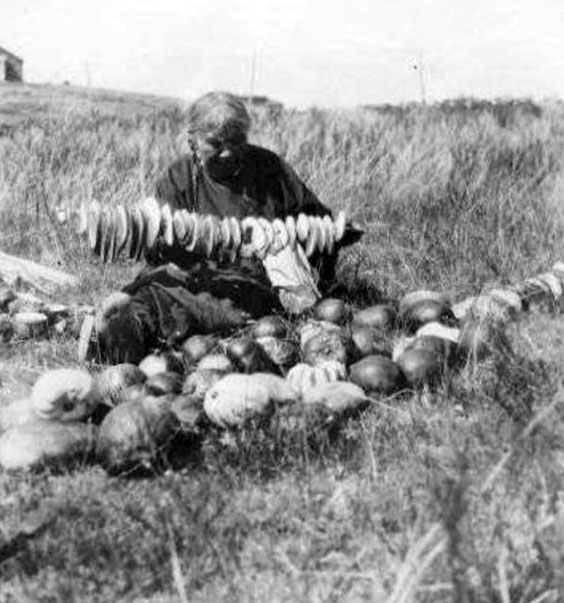
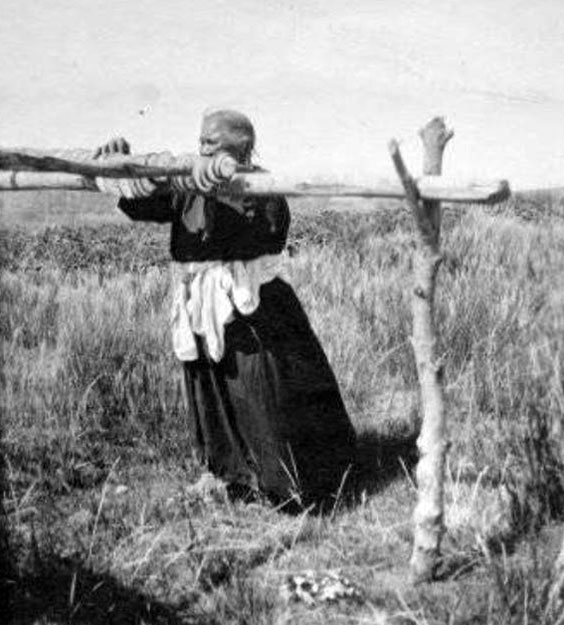
A lot of squash was prepared for winter food. In these photos, Owl Woman shows how squash was cut and prepared for the winter.

black and white photo of a native american woman harvesting squash

Owl Woman demonstrates four steps for squash preparation. First, slice the squash into rings using a squash knife. (Photo by Gilbert Wilson, SHSND SA 0086-0332)

Native american woman harvesting squash - photo 2

Second, after the squash are sliced, began stringing the slices on a spit. (Photo by Gilbert Wilson, SHSND SA 0086-0340)

native american woman stringing sliced squash

Third, finish stringing the squash slices. (Photo by Gilbert Wilson, SHSND SA 0086-0339)

Hanging up squash to dry

Finally, hang the squashes on a rack to dry. (Photo by Gilbert Wilson, SHSND SA 0086-0326)

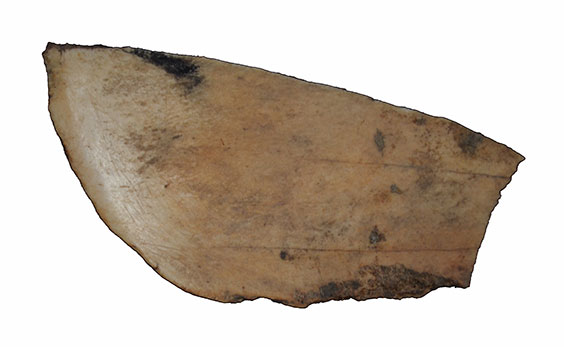
The squashes were sliced with squash knives typically made from bison scapulae (shoulder blades).

bison scapula bone used as a squash knife

A bison scapula squash knife fragment from Larson Village (32BL9). (SHSND AHP 2013A.19, F26, south half).

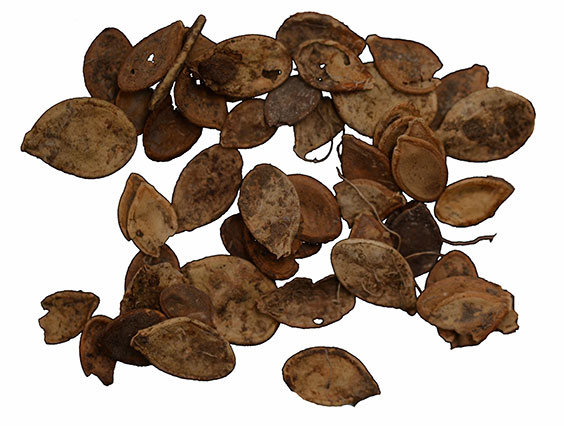
Squash were used for other purposes too. Some squash seeds were saved to plant the next year.

Squash seeds

Squash seeds from Like-A-Fishhook Village (32ML2). (SHSND AHP 12003.258)

Squash leaves could be used as disposable spoons. At harvest time young girls would sometimes pick out squashes to use as dolls.