Backstage Pass to North Dakota History

This blog takes you behind the scenes of the State Historical Society of North Dakota. Get a glimpse at a day-in-the-life of the staff, volunteers, and partners who make it all possible. Discover what it takes to preserve North Dakota's natural and cultural history.

Adventures in Archaeology Collections: Parts & Pieces

What do you see in this photo? (click photo to see larger image)
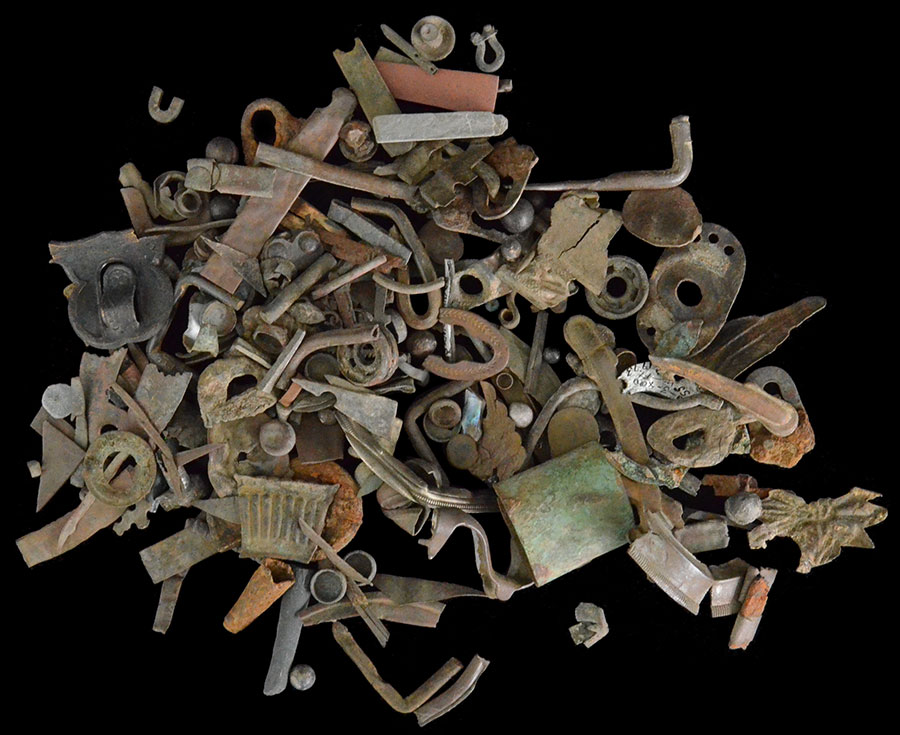
Miscellaneous Metal

Objects from a bag originally labelled “miscellaneous metal” (former 2010.99.3029

On the surface, it is a random pile of metal. But these aren’t just miscellaneous items, even though the bag they were stored in was originally labeled “miscellaneous metal”! They are artifacts that add to the story of a site. They are evidence of the things people used and the activities in which they participated. These are objects that were utilized, stored, discarded, lost, or left by people who lived at, worked at, or passed through Fort Rice (32MO102).

Part of the fun in sorting a bag of small parts and pieces is figuring out what they are—discovering that the pieces are part of something. Let’s take a closer look at a few of the items in that pile.

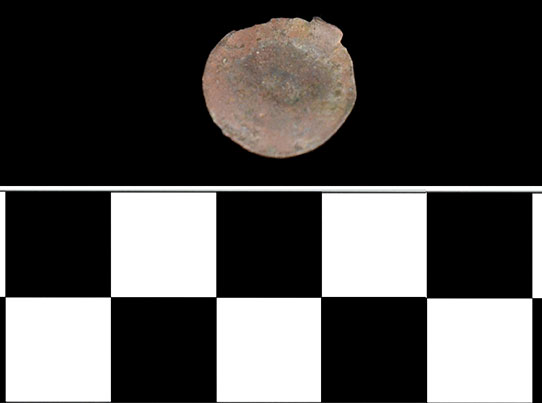
This plain-looking piece of metal is a tobacco twist or plug tag.
Tobacco twist tag

The artifact: a tobacco twist tag (2010.99.7493)

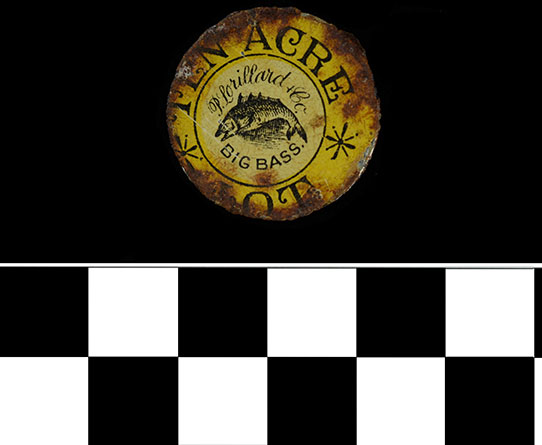
Both tobacco plugs and twists were used for pipe smoking or as chewing tobacco. Tobacco twists are formed by rolling and twisting tobacco leaves into a tight rope-like form. Cut blocks of pressed tobacco are called plugs. The tags were attached to the twists by a long prong while plug tags were attached with two short prongs. The tags were used to identify the tobacco brand. Any trace of a logo or decoration has worn off of this tag. Most tobacco tags were colorful like this more intact example from the site of Fort Berthold I.
Tobacco twist tag

An example: a tobacco twist tag from Fort Berthold I fort site (12711.144)

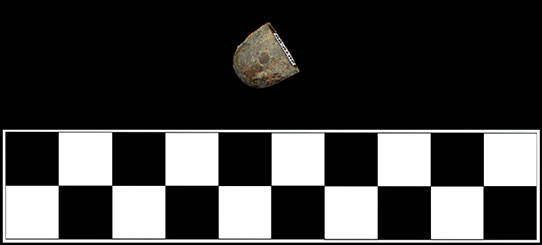
Some artifacts are only small parts of a larger object—like this item. It is a bolster (an end piece) from a pocket knife.
Pocket knife bolster

The part: a pocket knife bolster (2010.99.7477)
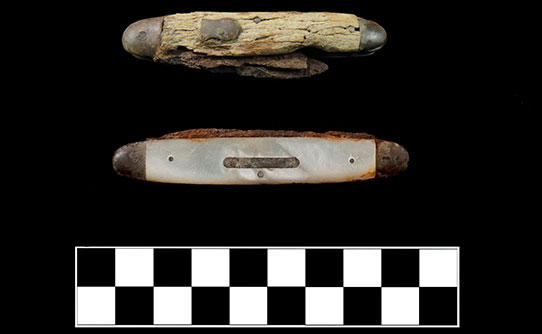
Pocket knives

Examples: almost complete pocket knives from Fort Rice. See where the bolsters fit? (2010.99.6179 & 2010.99.6187, photos by Doug Wurtz & David Nix – edited SHSND)

These odd looking fragments are pieces of friction primers used to ignite the gun powder in artillery.
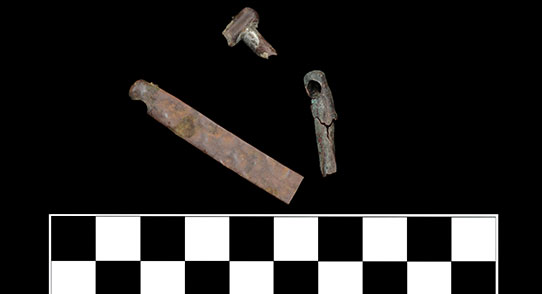
Friction primer fragments

Parts: friction primer fragments (2010.99.7480, photo by Doug Wurtz – edited SHSND)
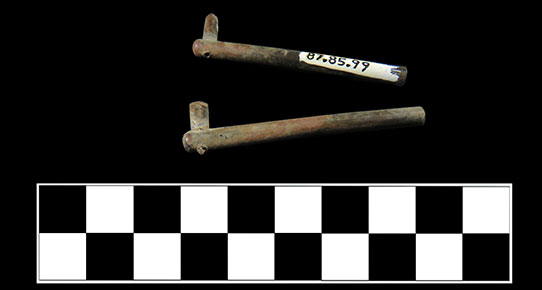
Friction primers

Examples: more complete friction primers also from Fort Rice (1987.85.98-99)

These are pieces of military insignia. There are at least three different types of hat insignia and what appears to be part of a regiment number or company letter in this group.
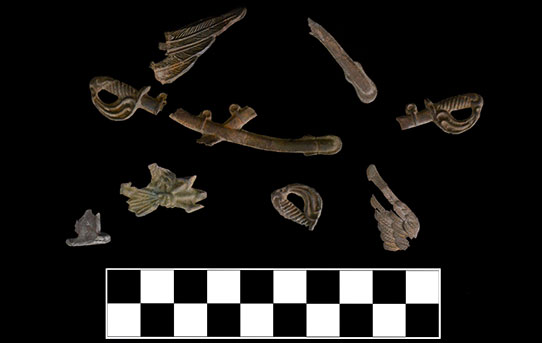
Military insignia fragments

Parts: military insignia fragments (2010.99.7487)
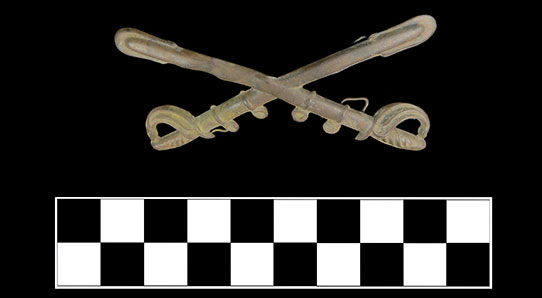
Cavalry hat insignia

Example: a complete cavalry hat insignia for an enlisted man, from Fort Rice (12003.2445, photo by Doug Wurtz – edited SHSND)
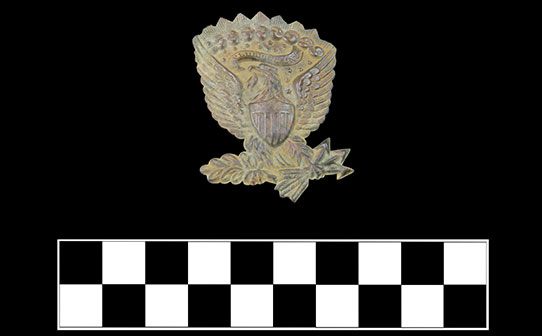
Model 1858 dress hat pin

Example: a Model 1858 dress hat (Hardee hat) pin from Fort Rice (2010.99.6132, photo by Doug Wurtz – edited SHSND)
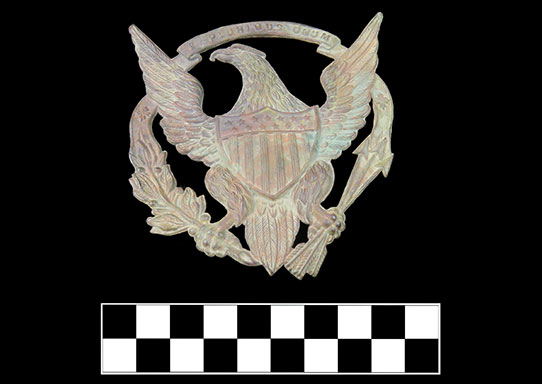
Cavalry dress helmet insignia

Example: an enlisted man’s cavalry dress helmet insignia from Fort Rice (2010.99.6144, photo by Doug Wurtz –edited SHSND)

This is part of a shoulder scale turnkey or button base.
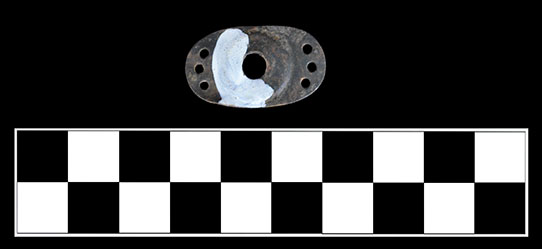
Button or turnkey base from shoulder scale

The part: a button or turnkey base from a shoulder scale (2010.99.7488)

Shoulder scales (a type of epaulet sometimes called brass scales, or metallic scales) were used as part of military uniform and were worn on the shoulders. The turnkey helped attach the main part of the shoulder scale to the rest of the uniform. Shoulder scales are made from many distinct pieces.
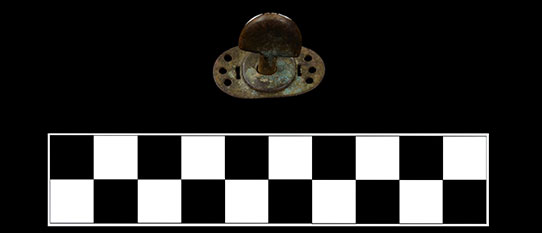
Turnkey or button from shoulder scale

Example: a complete turnkey or button from a shoulder scale from Fort Rice (2010.99.3493)
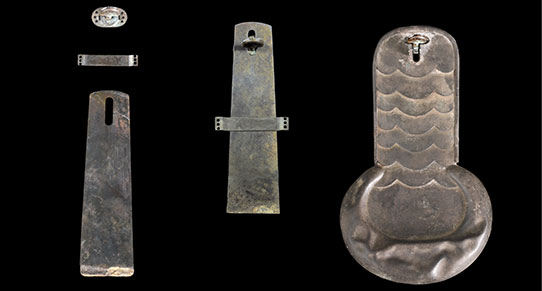
Attachment parts for shoulder scale

Example: attachment parts for a shoulder scale, right- the attachment pieces, middle - how the attachment pieces fit together, right – how the turnkey looks when fit attached to the complete shoulder scale (all pieces from Fort Rice)

Of course there are many other items visible in the first photo. Other artifacts so far identified in this group of objects include pieces of lead shot, a thumb tack, buckles, buttons, pencil leads, rivets, bell fragments, pocket watch parts, and even part of an earring! Two non-metal items were found in same bag as well. If you are up to the challenge, see if you can find the light blue glass bead and abalone shell fragment in the first photo! I’ll post the answer below.

How do you identify things you don’t recognize? I’ve had a lot of help identifying these and other objects. Asking other people is a good start--other staff at the historical society (museum, archives, education, paleontology, archaeology and historic preservation staff, even custodial staff), researchers, as well as volunteers and members of the public have all helped me. Online sources can also be helpful—like research blogs, re-enactment discussions, and museum websites. And of course, it is still hard to beat a really good book when looking for information (for instance, The U.S. Army in the West, 1870-1880 by Douglas C. McChristian was very helpful with many of the objects in this post).
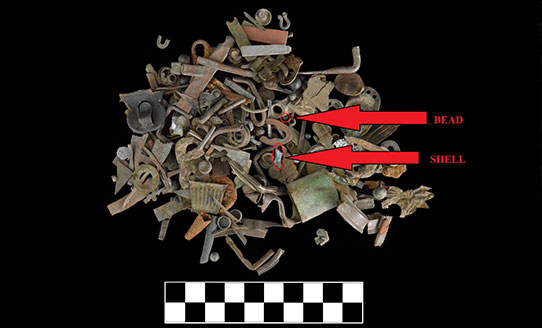
Bead and shell pointed out from first photo

Did you find the glass bead and piece of shell in the first photo?
Adventures in Archaeology Collections: What Have I Been Doing?
So many projects have been going on all at once that it was too hard to pick just one for the blog. So instead, let’s look at a variety of projects.

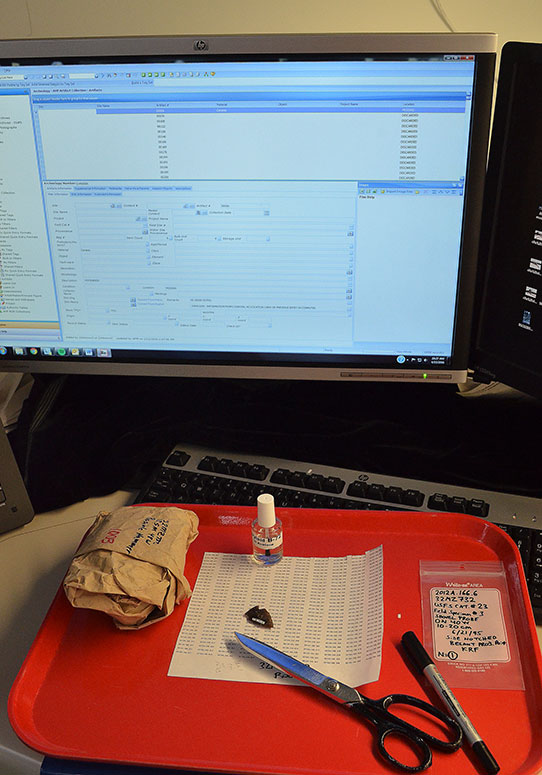
One of the projects that I am working on involves processing (labeling, rebagging, photographing as needed, and cataloging) a federally-owned archaeology collection stored here.

Compuer screen showing work in progress.

Work in progress.

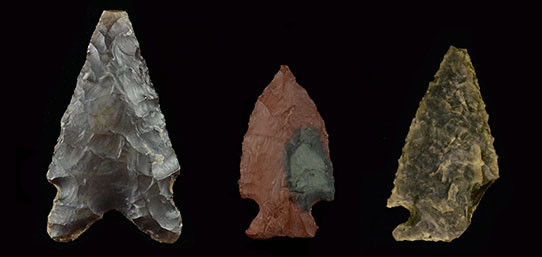
This project involves many different sites. It also includes many types of objects--ranging from historic artifacts like glass bottles to bone tools, flaking debris, and projectile points.

Projectile points

Projectile points from the U.S. Forest Service collections (2012A.166.13, 2012A.166.7, and 2012A.116.1)

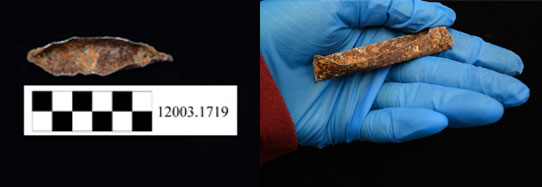
We are also still working on the cataloging project for artifacts from Like-A-Fishhook village (32ML2).  My favorite object that we have seen recently is probably this little toy canoe.

Metal toy canoe

Left: Metal toy canoe from Like-A-Fishhook village, a view from the top (12003.1719).
Right: Metal toy canoe from Like-A-Fishhook village, a view from the side (12003.1719).

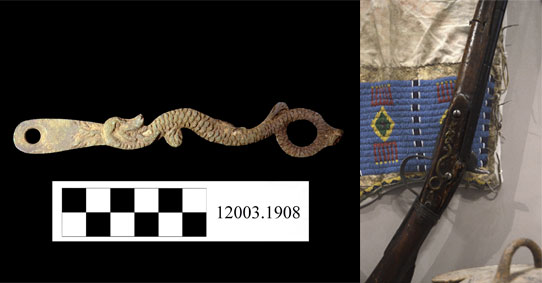
It is so perfectly shaped. We also recently found a dragon! Well, a metal dragon, at any rate. It is a sideplate from a gun. Another dragon sideplate can be seen on a percussion rifle on display in the Innovation Gallery: Early Peoples at the State Museum.

Metal dragon side plate from gun and .625 caliber Northwest trade gun

Left: A metal dragon side plate from a gun from Like-A-Fishhook village (12003.1908).
Right: A .625 caliber Northwest trade gun made by Isaac Hollis & Sons with a dragon sideplate on display at the State Museum (1982.93).

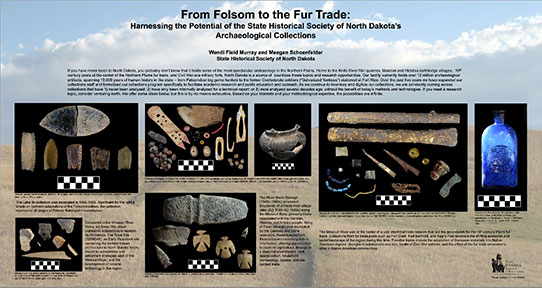
My supervisor and I also made a poster for a national archaeology conference this past month.  The conference was too far away to attend in person (it was in Orlando), but at least the poster could go to sunny Florida! It was for a session that gave museums an opportunity to share what kind of collections they have available for study. Archaeology collections are meant to be researched, so this was a great opportunity to share with students and archaeologists what North Dakota has to offer. North Dakota really does have amazing archaeology, so it was fun to find pictures of objects for the poster—from Paleoindian projectiles to Woodland pottery to seeds from village sites to gun parts and glass beads from trading and military forts. A lot of work from many people went into this poster. We used photos of artifacts from the Like-A-Fishhook project as well as photos taken by volunteer David Nix (see Wendi’s blog about Dave and his work at http://blog.statemuseum.nd.gov/blog/mission-possible).  We also coordinated with Brian Austin who works on graphic design for the agency—he finalized and printed the final product for us.

Society for American Archaeology conference poster

A small preview of what our poster for the Society for American Archaeology conference looked like.

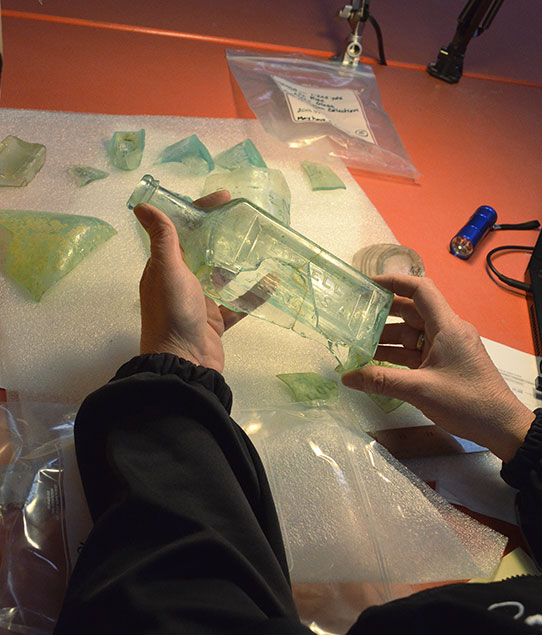
Speaking of researchers, it has been fun having a researcher working in the archaeology lab for a few weeks. This researcher is an archaeologist who is examining historic bottles from Fort Rice (32MO102) as part of her master’s thesis.

Studying glass bottles

A researcher studying glass bottles from Fort Rice.

We have a sizeable collection of glass and ceramic bottles and bottle fragments from this site. It will be exciting to see what her final project looks like and interesting to learn more about life at Fort Rice.

Adventures in Archaeology Collections: Like-A-Fishhook Village, Part II

In the archaeology lab we are still busy inventorying and photographing fascinating objects from Like-A-Fishhook village (32ML2), as part of an artifact cataloging project started in early 2015. We do this every Friday morning (we call it “Like-A-Fishhook Fridays”).  As you already know from my previous blog post about Like-A-Fishhook, (http://blog.statemuseum.nd.gov/blog/adventures-archaeology-collections-fishhook-village), it was the last traditional earthlodge village built in North Dakota and was home to Hidatsa, Mandan, and Arikara people.  It was occupied from about 1845-1889.

Since the site of Like-A-Fishhook is now under water, the artifacts collected during archaeological excavations in the 1950s provide a very important record of the village. The things that people left at the site tell us about what life was like: what the environment was like, what people traded, what people ate, and even the games that they played. Here are a few more artifacts that we have seen in the archaeology lab in the past few months:

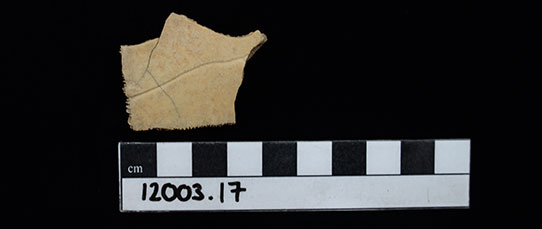
There is a piece of turtle shell.

Piece of turtle shell

A piece of turtle shell (12003.17)

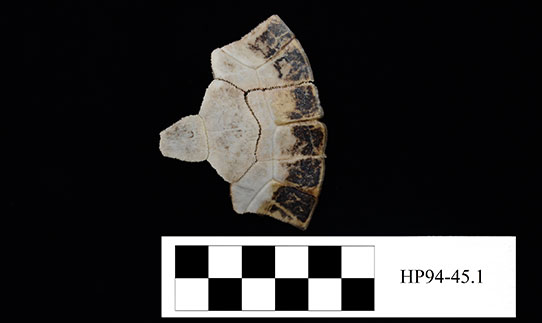
Notice the distinctive sutures (the zig-zag looking edges) where the shell fits together. We can compare this piece to examples of turtle shell in the faunal comparative collection.

Piece of turtle shell from comparative collection

A piece of a turtle shell from the AHP faunal comparative collection (HP 94-45.1)

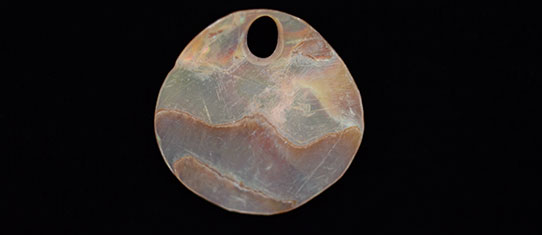
I was excited to see a beautiful abalone ornament. Abalone shell comes from the Pacific coast—a long way from North Dakota! How many hands did this shell pass through before it got to Like-A-Fishhook?  Who made it into an ornament? Was the ornament part of a necklace, or sewed on clothing? Who wore this?

Abalone shell ornament

An abalone shell ornament (12003.2276)

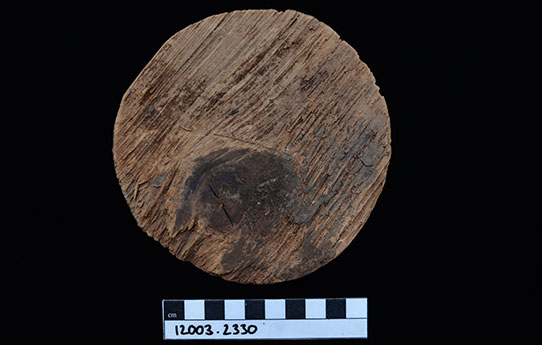
This is the end of a small wooden barrel. What do you think was stored or shipped in this barrel?

Wooden barrel end

A wooden barrel end (12003.2330)

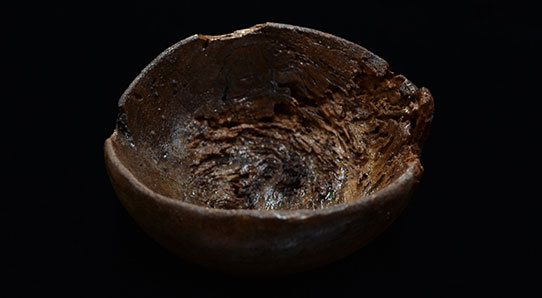
Another exciting object is a burl wood bowl.

Burl wood bowl

A burl wood bowl (12003.13175)

This bowl is almost perfect. I like to think that it looks ready for some stew!

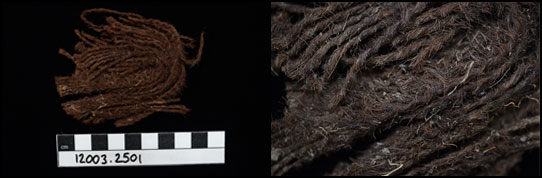
My favorite find from this past month included two samples that were labeled “bison hair cordage.”

Bison hair cordage

Left: Bison hair cordage (12003.2501)
Right: A close-up view of the bison hair cordage, you can see the cut ends of the fiber in this photo (12003.2501)

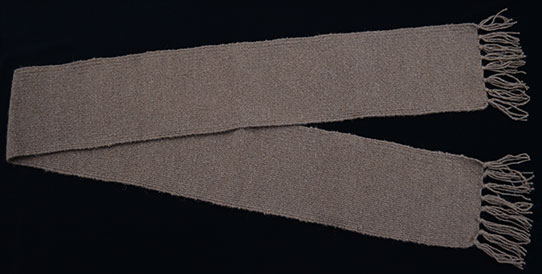
The fiber is twisted and looks like it has been cut into short pieces. Bison hair has been used for many things in the past, and people still use it to make things today.

Bison hair yarn scarf

A bison hair yarn scarf woven by Nancy Eley in 2015

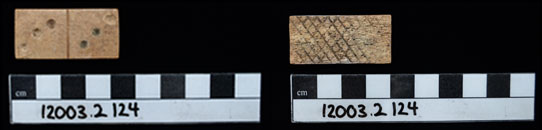
Work is important, but so are games! There are some domino pieces in this collection. This one is made of bone, and someone has carved a design on the back.

Domino made from bone

Left: A domino made from bone (12003.2124)
Right: The reverse side of the same domino (12003.2124)

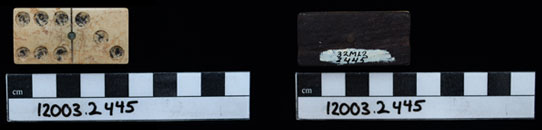
Another domino is made out of bone or possibly ivory, and a wooden back has been added to comlete the piece.

Domino made from polished bone or ivory

Left: A domino made from polished bone or ivory (12003.2445)
Right: The reverse side of the same domino, a piece of wood has been nailed to the bone or ivory face (12003.2445)

If only we could see what games were played with these!

We still have a lot more boxes to go through, and I promise to keep you updated on the exciting things we find!

Adventures in Archaeology Collections: Larson Village

Larson Village (32BL9) is an ancestral Mandan village site that was occupied from the late 1400s to the late 1700s. In 2010 repairs were made to a modern road that runs through the site. Archaeologists excavated the area affected by the roadwork. The excavated area mostly contained cache pits (storage pits) and a midden area (trash heap)—both types of features are valuable sources of information about how people used to live! And a lot of information usually means a lot of work . . .

The collections from the excavation came to the State Historical Society’s Archaeology and Historic Preservation division in 2011. Since that time, our dedicated volunteers have been busy sorting the artifacts from Larson Village. After that much work, it is understandable that a person might wonder if any of the objects being sorted will ever be seen again! In this case, the answer is definitely yes. Part of a reconstructed pot can already be seen on display at the State Museum in the pottery case in the Innovation Gallery: Early Peoples.

Reconstructed pottery

Reconstructed pottery from Larson Village, now on display in the Innovation Gallery of the State Museum (2012A.13.1)

However, most of the excavated items are still being sorted into different types of materials – animal bone, stone tools, seeds, charcoal, ash, pottery and more! But this does not mean that these objects will not be used or seen. The sorting is being done so that the objects can be sent to specialists who study specific types of artifacts. A faunal specialist (someone who studies animal bones) will be able to tell us more about the different types of animals that were used by the people living at Larson. Someone who specializes in lithic tools (stone tools) might be able to tell us where people found the materials that were used to make the tools, or from where the materials might have been traded. Knowing what kind of seeds are present at the site might tell us what kind of plants were being used for food, materials, or were growing in the surrounding environment. This kind of detailed information helps give us a better picture of how people lived and interacted with the world around them. After the objects are analyzed and the data is compiled, a final report can be written about the excavation of the site.

It might be a while before this project is completed, but here is a chance to see some of the artifacts found so far.

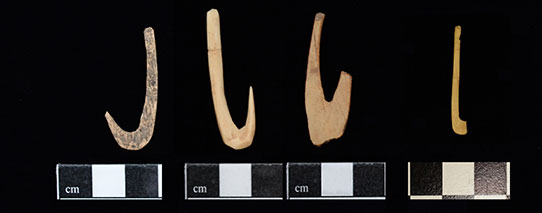
Just in time for fishing, here are some of the bone fishhooks.

Bone fish hooks and fragments

Bone fish hooks and fish hook fragments from Larson Village (2012A.13)

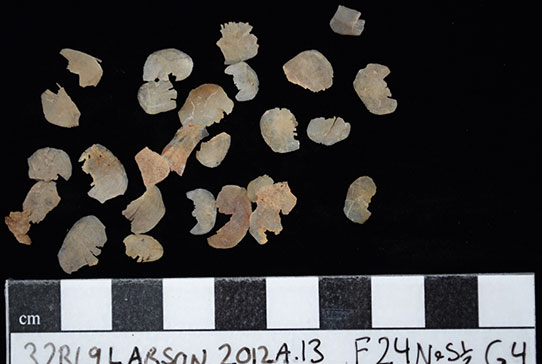
And to give the fishhooks a better story, here are some of the many fish scales that our volunteers have also found.

Fish Scales

Fish scales from Larson Village (2012A.13)

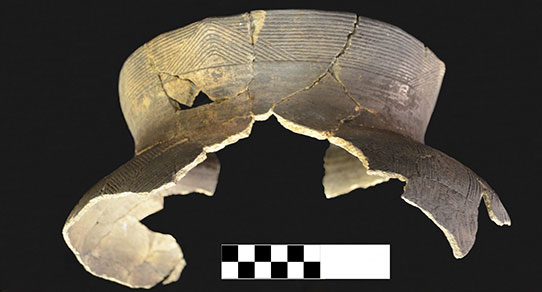
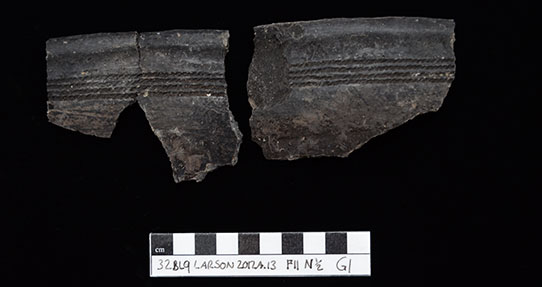
There are some very nice pottery like fragments, like the ones from this pot that was decorated with cord impressions.

Pottery decorated with cord impressions

Pottery decorated with cord impressions from Larson Village (2012A.13)

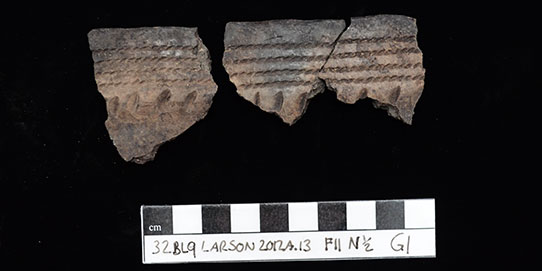
Pottery sherds are interesting to look at and fun to discover, especially when the fragments fit together like a puzzle.

Pottery

Pottery from Larson Village (2012A.13)

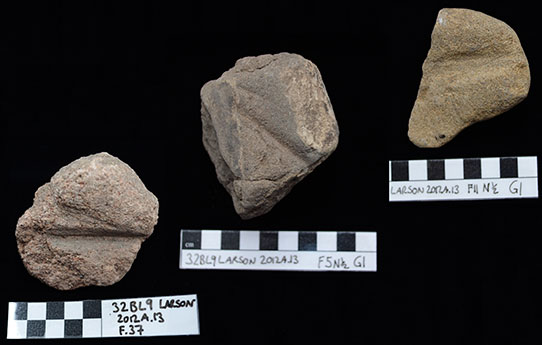
Some of my favorite things to find are fingerprints! Someone left their fingerprint impressed in the clay when they made this piece of pottery a long time ago.

Pottery fragment

Pottery fragment with a fingerprint impression from Larson Village (2012A.13)

Stone abraders are tools that were used for sharpening and shaping other tools and objects – for instance . . .

Stone abraders

Stone abraders from Larson Village (2012A.13)

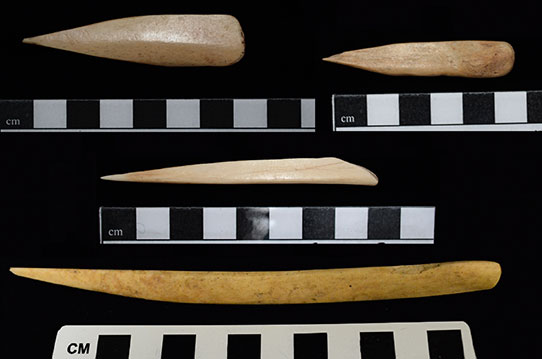
. . . all the awls! Bone awls were tools used for various things including punching holes in materials like hides for sewing.

Bone awls

Bone awls from Larson Village (2012A.13)

Hopefully I will be able to post more photos of artifacts from Larson Village as the sorting continues.

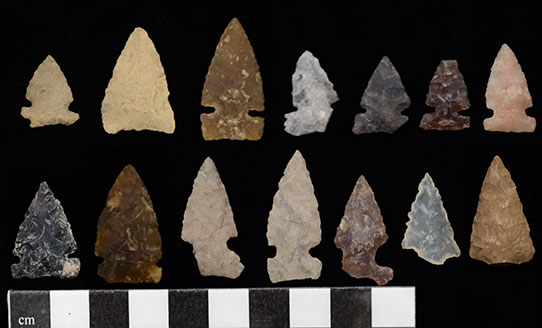
Projectile points

Projectile points from Larson Village (2012A.13)

Feel free to send me a message if you would like more information about how you can help us out in the archaeology lab.

Adventures in Archaeology Collections: Like-A-Fishhook Village

This month a journey began into the collections from Like-A-Fishhook Village (32ML2). Why Like-A-Fishhook? And why all the excitement?

An archaeologist on our staff is researching Like-A-Fishhook as part of her dissertation work. So, part of the excitement is getting to look closely at the objects as she inventories and photographs them. Also, as an older collection, the objects are in need of being repacked. The rest of the excitement has to do with the site itself.

Into the 19th century, the Mandan, Hidatsa, and Arikara peoples were prosperous traders, hunters, and farmers who lived in earthlodge villages and grew corn, beans, squash, and sunflowers in large gardens along the Missouri River. But in 1837 a small pox epidemic took a large toll on native populations in North Dakota. The loss of so many people during the epidemic, combined with ongoing conflicts with nomadic groups, led the Mandan, Hidatsa, and Arikara peoples to settle together for mutual protection. By 1845 Hidatsa people and some Mandan people had settled at a new village site nestled in a large bend of the Missouri River. The large bend was shaped like a fish hook—which is why the village was called Like-A-Fishhook. The Hidatsa were later joined by more Mandan people, and by 1862 the Arikara people joined the village as well. Multiple cultures, languages, and traditions lived in close proximity in this village, making it very unique. Like-A-Fishhook was the last traditional earthlodge village settled in North Dakota. Situated next to Fort Berthold, it was a home and a hub of trade for people for more than forty years. The US government, however, began encouraging the people at the village to resettle, and by 1889 the village was mostly abandoned.

Most of the objects in our Like-A-Fishhook collection came from the River Basin Surveys. The River Basin Surveys were started as a series of archaeology projects in the mid-1940s sponsored by the National Park Service and coordinated by the Smithsonian Institution. After World War II dam building became a popular method for flood control, but many archaeology sites located on rivers were being destroyed as a result. In North Dakota, many of the early River Basin Surveys attempted to record important places along the Missouri River before they were flooded by the construction of the Garrison Dam. The location of Like-A-Fishhook is now underwater, but several excavations took place at the site before the river flooded it. The artifacts and records from the River Basin Surveys are part of the surviving record of the site.

Like-A-Fishhook

Left: Some crew members from the Like-A-Fishhook River Basin Survey excavations in July 1954, left to right: Hubert Smith, Jerry Giddings, Fred McEvoy (holding “Fishhook”), Harold Dietsch, Bruce Conner, Alan Woolworth, Ray Wood, Lee Madison, and an un-identified visitor to the site (Photo by Raymond Price, AHP Archaeological Records)
Right: A view of part of the Like-A-Fishhook River Basin Survey excavations in July, 1954. The tents from the archaeologists’ camp can be seen in the left background. (Photo by W.R. Wood, AHP Archaeological Records)

We are now are going through the objects in the archaeology collection to photograph, record, and repack the artifacts in archival materials (in bags and boxes that will not damage the artifacts over time). We have only just started this project, but here are a few of the things that we have seen so far.

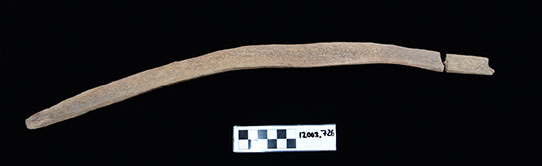
One of the first boxes we opened had an elk antler bow fragment in it. I have not seen an elk antler bow before!

Elk antler bow fragment

Elk antler bow fragments (12003.726)

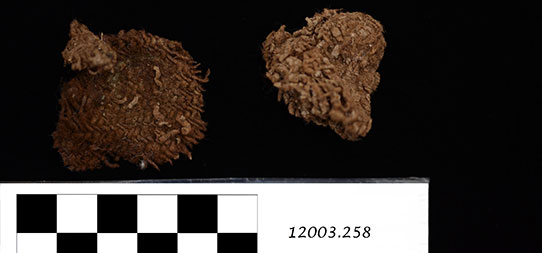
I was excited to see some cloth fragments! Cloth does not survive very well in North Dakota’s climate, so it is not very often that we have any in our archaeology collections. What do you think was made from this cloth material?

Cloth fragments

Textile fragments (12003.258)

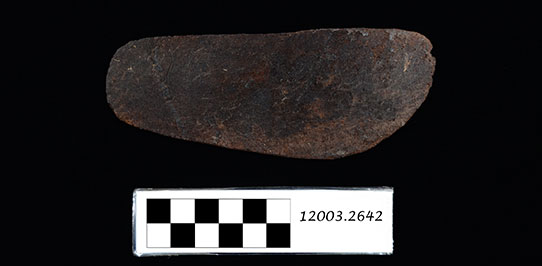
There was a small child-sized leather shoe sole. I would like to know who this shoe belonged to and how old he or she was when it was worn.

Leather Shoe Sole

Leather shoe sole (12003.2642)

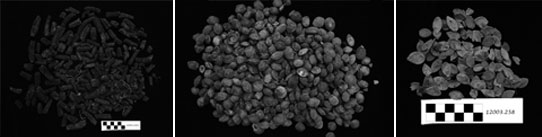
The first few boxes contained a lot of plant materials. There were many charred corn cobs, plum pits, and squash seeds. Plant remains are interesting because they can show what types of food people were collecting or growing, harvesting, and using or eating.

Plant material

Left: Charred corn cobs (12003.2263)
Middle: Plum pits (12003.258)
Right: Squash seeds (12003.258)

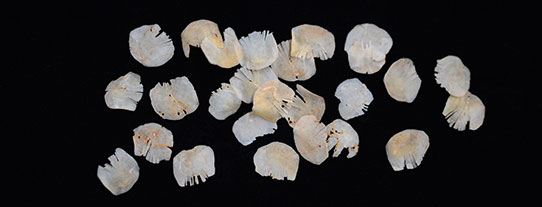
There were also some fish scales, so I am assuming someone enjoyed a good fish dinner.

Fish scales

Fish scales (12003.258)

We have many more boxes of Like-A-Fishhook artifacts to go through, so hopefully I will be able to share some more of the objects that we find in the future!

Adventures in Archaeology Collections: Fort Rice

If you could go into the archaeology collections storage, what would you find? Mostly a lot of boxes. If you could peek into those boxes, what would you see? Mostly a lot of bags! If you could look inside one of those bags, what would you see? You would finally find an object! Since it isn’t possible for everyone to visit all the collections (and even if you could, there would not be much that you could easily see), this is the perfect opportunity for an online collections tour! This week’s tour will take us through some of the collection from Fort Rice (32MO102), a state historic site in Morton County, North Dakota (http://history.nd.gov/historicsites/rice/index.html).

Why Fort Rice? Quite a few projects I have worked on recently have involved this site, so there happen to be a lot of fun photos available. Dr. Barbara Handy-Marchello recently gave a talk at the fall North Dakota Archaeological Association (NDAA) meeting about the lives of officers’ wives who lived at this fort, and she needed me to photograph specific objects for her presentation. In the meantime, I cataloged about 678 additional objects from the site.

The first Fort Rice was established in 1864 as part of a chain of military forts built to protect transportation routes in the region. In 1868 Fort Rice was expanded and used as a military post until it was finally abandoned in 1878. Most of the objects in our collection date to the time of the fort, though some of the objects are more recent. Others pre-date the presence of non-native peoples in the area.

What kinds of questions come to your mind when you look at these objects? I wonder what their stories would be if they could talk (or write their own blog)!

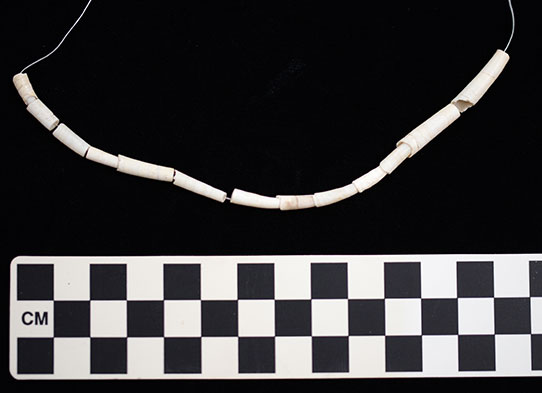
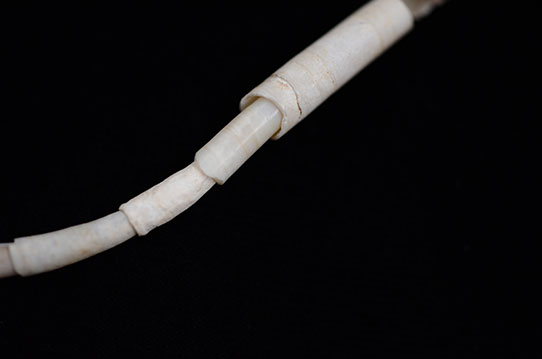
Dentalium shell beads, like these, come from the ocean. Who wore these beads?

Dentalium shell beads

(2010.99.7312)

Dentalium shell beads

(2010.99.7312)

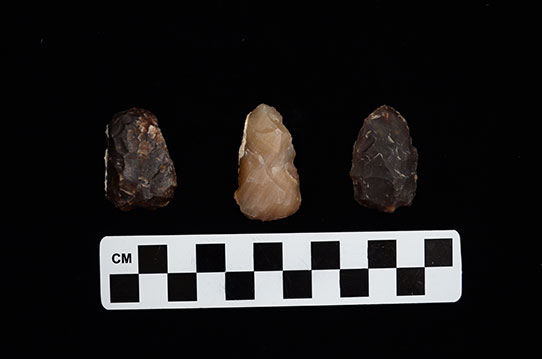
These are stone end scrapers for preparing animal hides. What was made out of the hides that these helped prepare?

stone end scrapers

(2010.99.6885, .6881, and .6884)

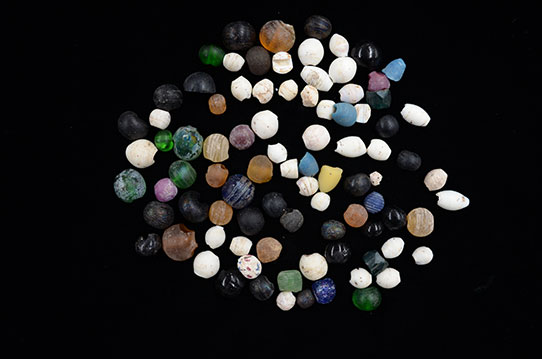
There are a lot of beautiful glass beads from Fort Rice. Which color would you pick to wear and why?

glass beads from Fort Rice

(2010.99.7198)

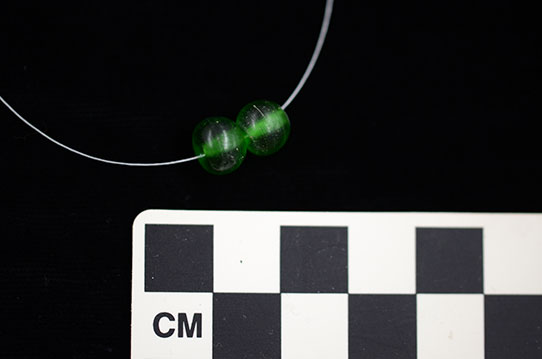
I would pick the green beads. I like green!

green beads

(2010.99.7242)

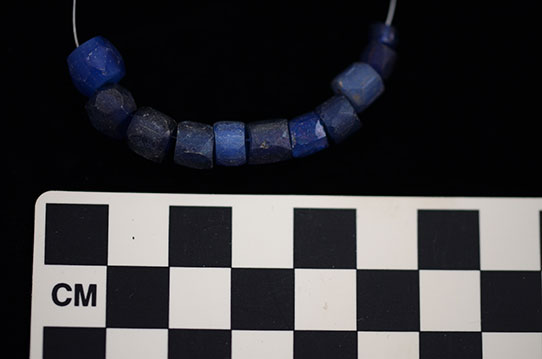
Or maybe I would choose the blue glass beads–I also like blue!

blue beads

(2010.99.7228)

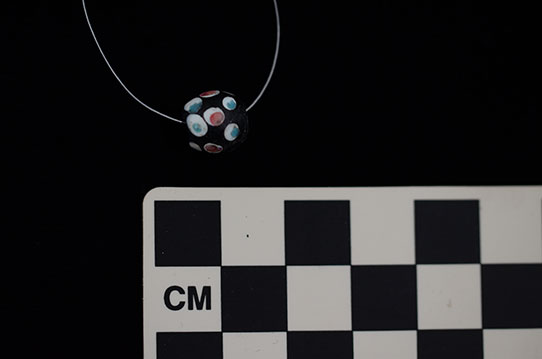
Or there is a bead with spots! Maybe I will just have to do a future post all about beads.

bead with spots

(2010.99.7307)

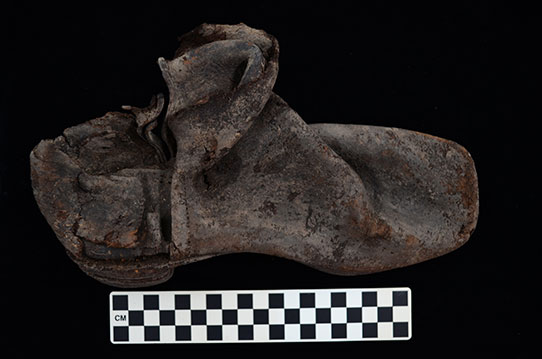
This boot was made for walking! Who wore this boot and where did they walk in it?

boot

(2010.99.7444)

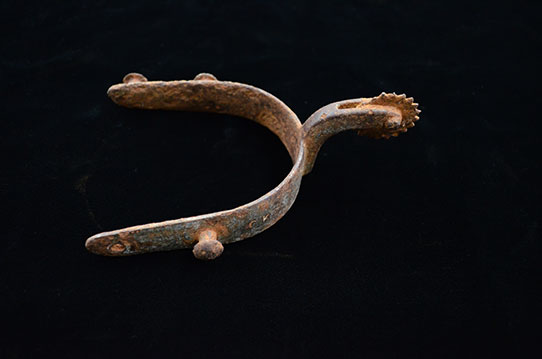
A metal spur. Did the person who wore this like riding fast? What was the horse’s name?

metal spur

(2010.99.3214)

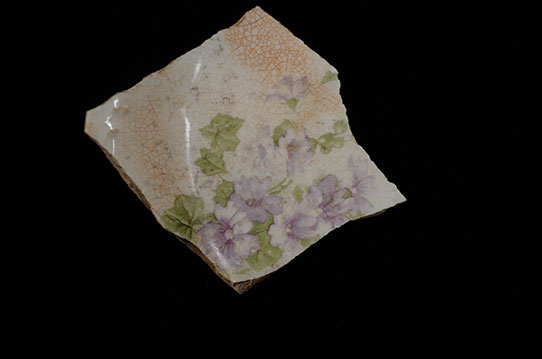
A fragment of a ceramic plate or saucer. This would probably have been part of a fancy place setting. What dinner party conversations did it witness?

fragment of a ceramic plate or saucer

(2010.99.1206)

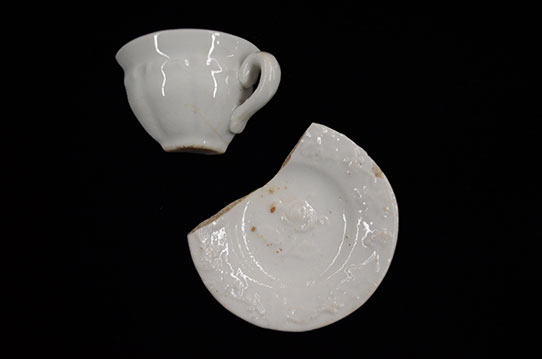
These are fragments of a doll’s tea set. Was this someone’s favorite toy?

fragments of a doll's tea set

(2010.99.6296 and .6295)

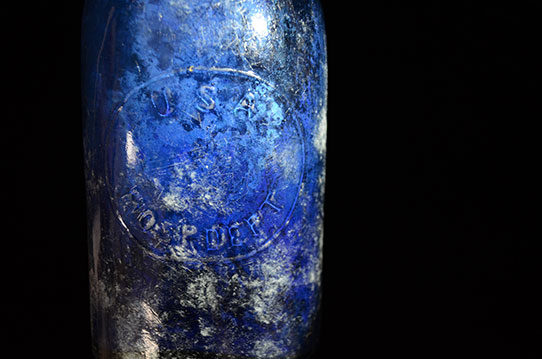
There are a lot of glass bottles in the Fort Rice collection. This is a close-up of a medicine bottle. The letters on the bottle read: USA HOSP DEPT. Who needed this medicine and why?

medicine bottle

(2010.99.2213)

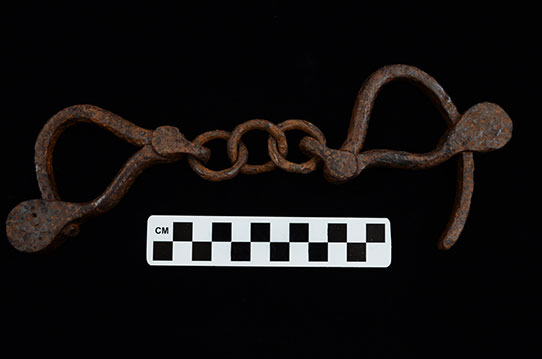
Metal handcuffs. These look rather unpleasant. I wonder who had to wear these and for how long?

metal handcuffs

(2010.99.6159)

Where should we go next on our archaeology collections tour? Please let me know what kinds of artifacts or collections you would like to see in my next post!