Backstage Pass to North Dakota History

This blog takes you behind the scenes of the State Historical Society of North Dakota. Get a glimpse at a day-in-the-life of the staff, volunteers, and partners who make it all possible. Discover what it takes to preserve North Dakota's natural and cultural history.

3 Tips for Searching State Archives Collections on fiNDhistory

The State Historical Society of North Dakota’s new searchable database—fiNDhistory—allows the public to view, browse, and search holdings as they are added, scanned, and edited in real time. Here are three tips to search for State Archives collections on the site:

1. Search within a specific directory

The State Archives holdings include local and state government, manuscript, photograph, and library collections. These unique collection types are stored and managed separately on-site and appear as distinct searchable directories on fiNDhistory. In addition to these directories, there are indexes for State Historical Society publications (titles are listed on the landing page) and Foundation tributes managed by the State Archives. More indexes will likely to be added in the future.

As an alternative to a global search, which includes all directories (at all levels), you can search within a specific directory to quickly return a manageable list of results. On the home page, click on the desired collection type/directory to search within it. There, you will find a search box where you can type your term.

Archival directories and indexes (highlighted) may be searched globally or individually.

Data within fiNDhistory is set up to mirror how collections and materials within them are physically organized. The library collection is keyword search only, but searches within the other collection types include the option to narrow the search by archival level (found below the search box). Collection level records describe each collection as a whole, providing an overview and selected terms that apply to all boxes and materials within. The archival level “collection” filter searches this broad collection-level information. Series is an intellectual level of description used by archivists that is great for physical organization of collections but the least useful for searching. File unit records include titles and dates of the contents of each folder in every collection. This level is probably the best for searching because most collections have file descriptions. Additionally, a file unit search may pull results that a collection level search would not. Finally, the archival level item searches all item records that have been created within each collection. Note that this will not search for every single item in the archives, only the items that have been described. The quantity of item records vary widely across directories: Photograph and manuscript collections often include item records, while local and state government collections rarely do. The archival level dropdown also allows for a search of all levels.

Drop-down option to select the level of the archival record to be searched.

It should be noted that all collection types contain photographs, but photograph collections consist of only photographs. Audiovisual recordings are primarily found in manuscript collections (but are also in local and state government records).

2. How to find scanned items

To determine if something is digitized, begin your search. A global search will include results from State Archives and museum collections and indexes and will order results first by directory, then by archival level.

If scanned images are available, they will appear alongside records in the results. Click on the thumbnail to enlarge.

Thumbnails of scanned images appear next to item records in the search results.

Find available document scans or other media files by clicking into the records.

Then, if documents or other resources have been digitized (into nonimage formats), there will be a file under related media. Click the file name (not the icon) to access the file.

Select the appropriate program to open the file if needed.

Note that a search may be restricted to “online only,” revealing only those results with records or adjacent records (such as collections with at least one digitized item within).

3. View a collection as a whole

To view an entire collection, conduct a global or directory-specific search. You can narrow a search to “collection” for archival level or select a collection level record from global search results by clicking on the collection number. At the bottom of the page, after the collection-level description, there is a section listing the materials in the collection. These might include series, file unit, and item records.

Click on the title of the record for more information.

The right side of the page will describe the selected record. Related records will appear to the left and are searchable.

These three tips for searching fiNDhistory are a great starting point. Additional tips for navigating the site can be found on this YouTube video. If you have any questions or need assistance, we are happy to help! Contact us at archives@nd.gov or 701.328.2091.

Join the State Archives on a Proactive Collecting Journey!

The State Archives recently developed a proactive collecting survey because we want public input on what types of documents we should collect. This feedback tells us what topics or events people are interested in for research, genealogy, teaching, general information, entertainment, enjoyment, and other purposes. With this information, we can better describe and highlight those themes in our existing collections and actively seek representation through new items that document those topics.

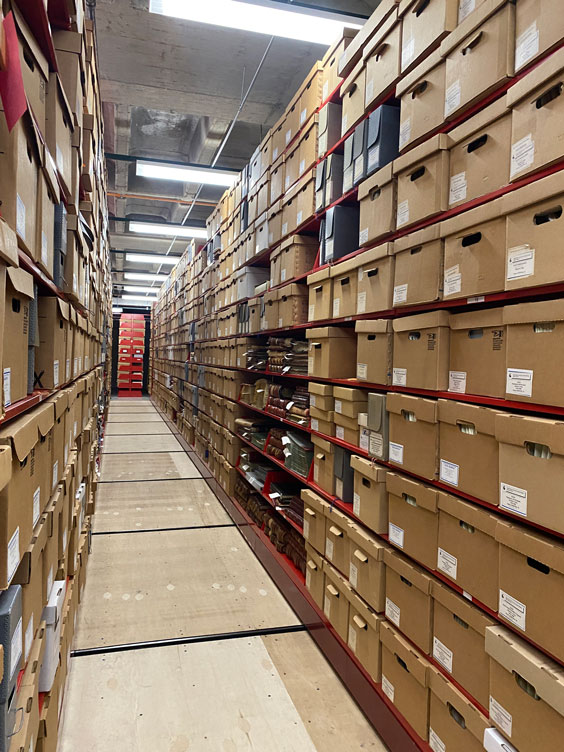
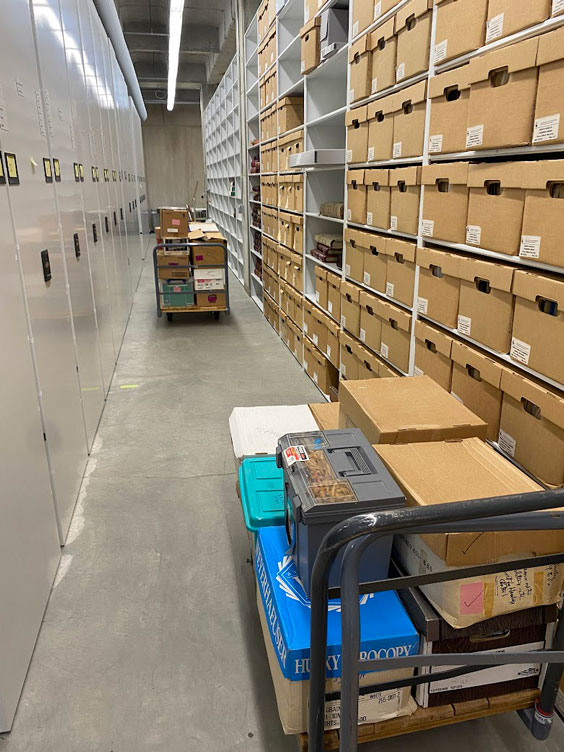
Row of existing manuscript collections at the State Archives.

Opening the doors to public input is now the norm across the field of archives, but it hasn’t always been that way. There are many reasons why proactive collecting can be difficult for archives. First, we can only collect what has been created. While we may want documentation of an event, person, or topic, that documentation may simply not exist. On the other hand, since we do not know every single document that has ever been created, we hold onto the hope that important historical records do exist and may someday be found, identified, and donated. At the State Archives, we are continuously surprised about the documents and collections people do have and donate to us; this keeps the hope alive that amazing collections are out there and will continue to trickle in.

There are other reasons why proactive collecting can be challenging. A lot of people are unfamiliar with archives and have no idea that we are here or even that we want more documents. Trust me, if it is about North Dakota or its people, we do! It often takes a generation (or more) for items to be donated because the creators or owners want to regularly use or see the documents. To alleviate any concerns, we try to emphasize that anyone can come into the Reading Room at any time during our open hours to view or use these items. We have reference staff who can help with remote access as well. These services apply to the original owner but also expand access to a broader base of researchers and the public.

People typically think about donating their papers during a major life change or transition, such as downsizing, death, or retirement, which means that documents don’t arrive to the archives until long after their creation date. Since archival material can deteriorate from environmental factors, emergencies, format obsolescence, deletion, etc., that means unfortunately, some historic materials simply don’t live long enough to make it into an archive. Proactively collecting documents into the archives for proper storage and care helps preserve more North Dakota history for future generations.

Sometimes collections do not make it into archives because it can be more lucrative to sell online instead of donating. However, the concept of value is different for archives: For us, a document’s worth is based on its research value and relationship to our collecting scope. Think in terms of intrinsic and historical or informational value versus monetary value. With that being said, we rely on donations of collections because we cannot compete with buyers on the free market.

Valuable contemporary documentation of life is often discarded, deleted, or overlooked because of the misconception that we only want “old stuff.” It is true that we have a lot of “old stuff” in our archives, and this is a primary reason for proactive collecting in the State Archives. Since documentation of modern life in our collection is lacking, we are putting a call out for records of everyday life in North Dakota today (and for the last 50 years). Related to the “old stuff” misconception is that we want everything that is old. Most of us at the archives are history buffs and greatly appreciate historical documents and “old stuff.” However, we remain committed to collecting within our scope, which dictates that items must represent North Dakota or its people to be included in the State Archives’ collections.

While we archivists have a good grasp of what we have in our collections, it is critical to have fresh perspectives on what we should focus on and proactively collect. History is the sum of a myriad of different voices, lives, and identities. With that in mind, we want the collections of the State Archives to represent the broadest possible spectrum of experiences. To achieve this goal, we need that same breadth of thoughtful responses to the question of what we should collect. Please help us to achieve this and grow by filling out this survey and contributing to the proactive collecting conversation.


Lifecycle of a New Collection at the State Archives


1. Materials arrive at the State Archives.


2. Archivists assess and sort the collection.


3. Archivists organize documents into boxes and folders and enter collection information into our database.


4. Collection lives in temperature- and humidity-controlled storage until it is pulled for use by staff or researchers.


5. On-site researchers can access collections at the State Archives Reading Room. Reference staff are available to assist remote researchers.

At the State Archives, We Want To Know You Better!

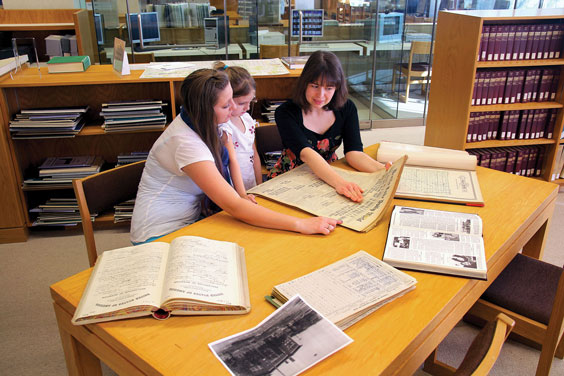
Two women and a younger girl sit at a wooden table looking at a number or documents and pictures.

Take the time to fill in the State Archives’ survey and help us serve you better.

The State Archives has launched a short demographic survey, the first in a series, and we invite you to participate! As stewards of the documentary history of North Dakota and its people, we want to know the people we serve, how we can improve our services, and how we can bring new interest to the wonderful world of archives and historical research.

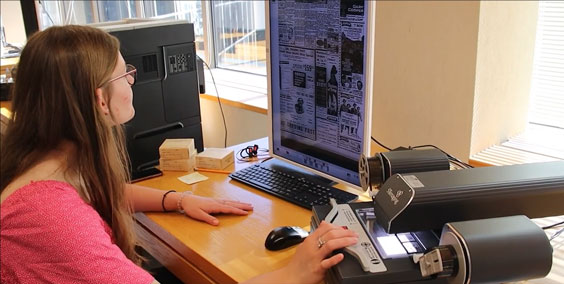
A woman in a pink shirt and glasses with long hair sits at a computer using a microfilm machine to scroll through an old newspaper.

The State Archives’ resources can help patrons solve genealogical mysteries.

Our overarching goals are to get better acquainted with those we serve and increase services and outreach to grow all audiences. With that in mind, we’ve compiled a list of reasons for why getting to know our clientele will help us reach these goals:

1. Communication: We can devise the best strategies to communicate who we are and what we do.

2. Engagement: Those who have fun together learn better together. We can share our love of history with our users in more effective ways.

3. Collection description and access: We can prioritize the identification, description, and digitization of items and collections of significant research interest. 

4. Technology: We can utilize technologies that are familiar to our audience to provide better access to our collections as well as identify and assist with less familiar technologies. 

5. Programming: We can design programming to engage our current patrons and draw in groups of people not previously reached. 

6. Collection acquisition: We can focus on acquiring collections that align with the research interests of our users and identify and fill topical gaps in our collections. 

7. Overall experience: We want visitors to have fun here (and on our website), to use our resources to solve mysteries, answer questions, and formulate new ideas. We want the journey of conducting research and finding information to be as streamlined as possible. As archivists, we are proud of the history we get to work with every day and want to share our love of history with everyone, whether they are virtual or on-site, a first-time visitor or a regular. We truly believe that history is created by everyone, and that history is for everyone.

Documenting the MHA Nation: Marilyn Cross Hudson Collection Opens to the Public

Here at the North Dakota State Archives we are thrilled to announce that a lifetime of research and writing by tribal historian Marilyn Old Dog Cross Hudson has been processed and is now open to the public. The collection includes research, manuscripts, articles, working and subject files, historical records, photographs, and other materials created or collected by Hudson. Major subjects include tribal and oral histories of the Mandan, Hidatsa, and Arikara Nation, as well as stories of Native American veterans, rodeos, and ranching, and of the Cross family. The collection also features records, histories, and photos of Elbowoods High School and the city of Parshall, North Dakota, Hudson’s home from 1953 until her death in 2020.

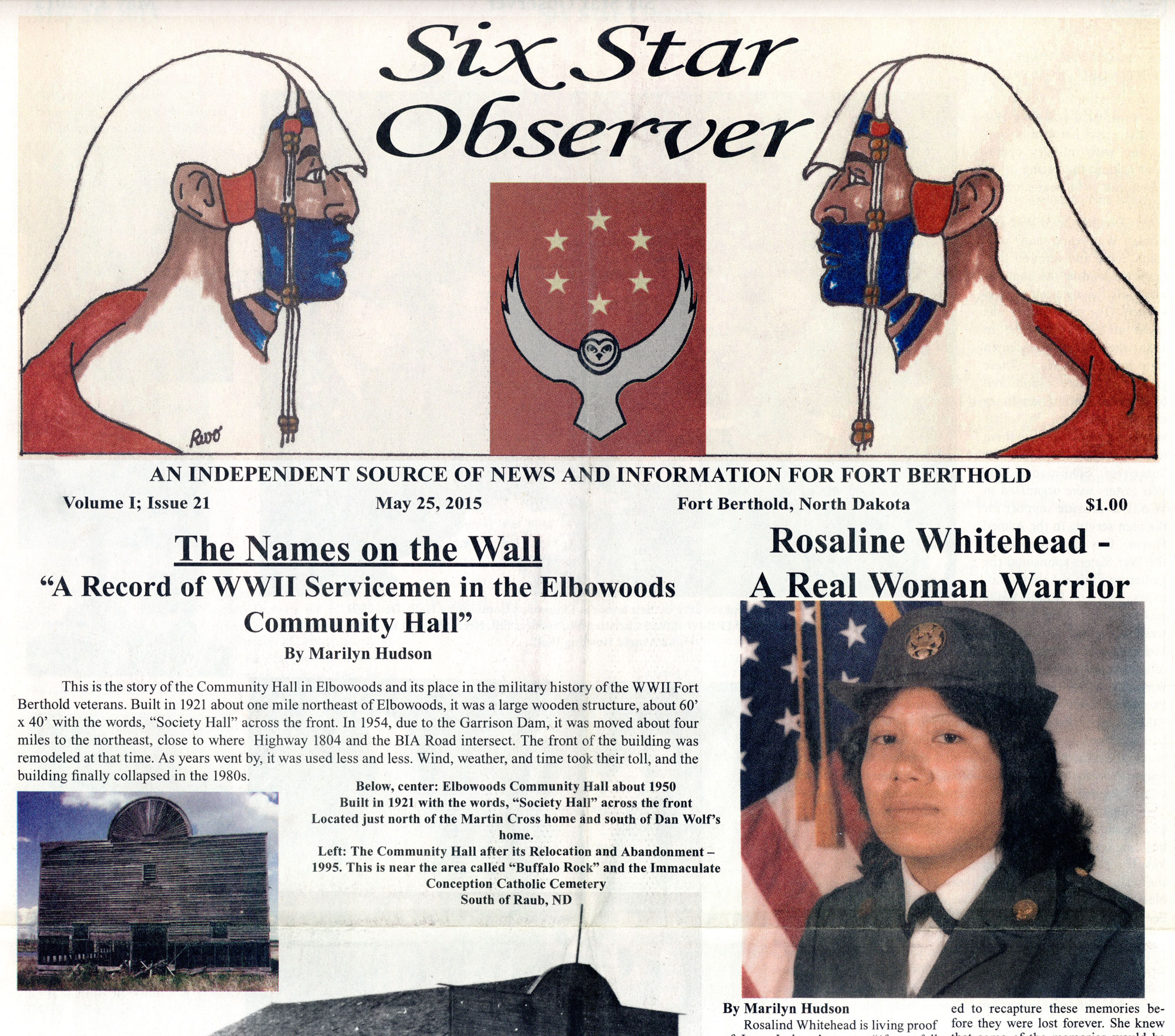
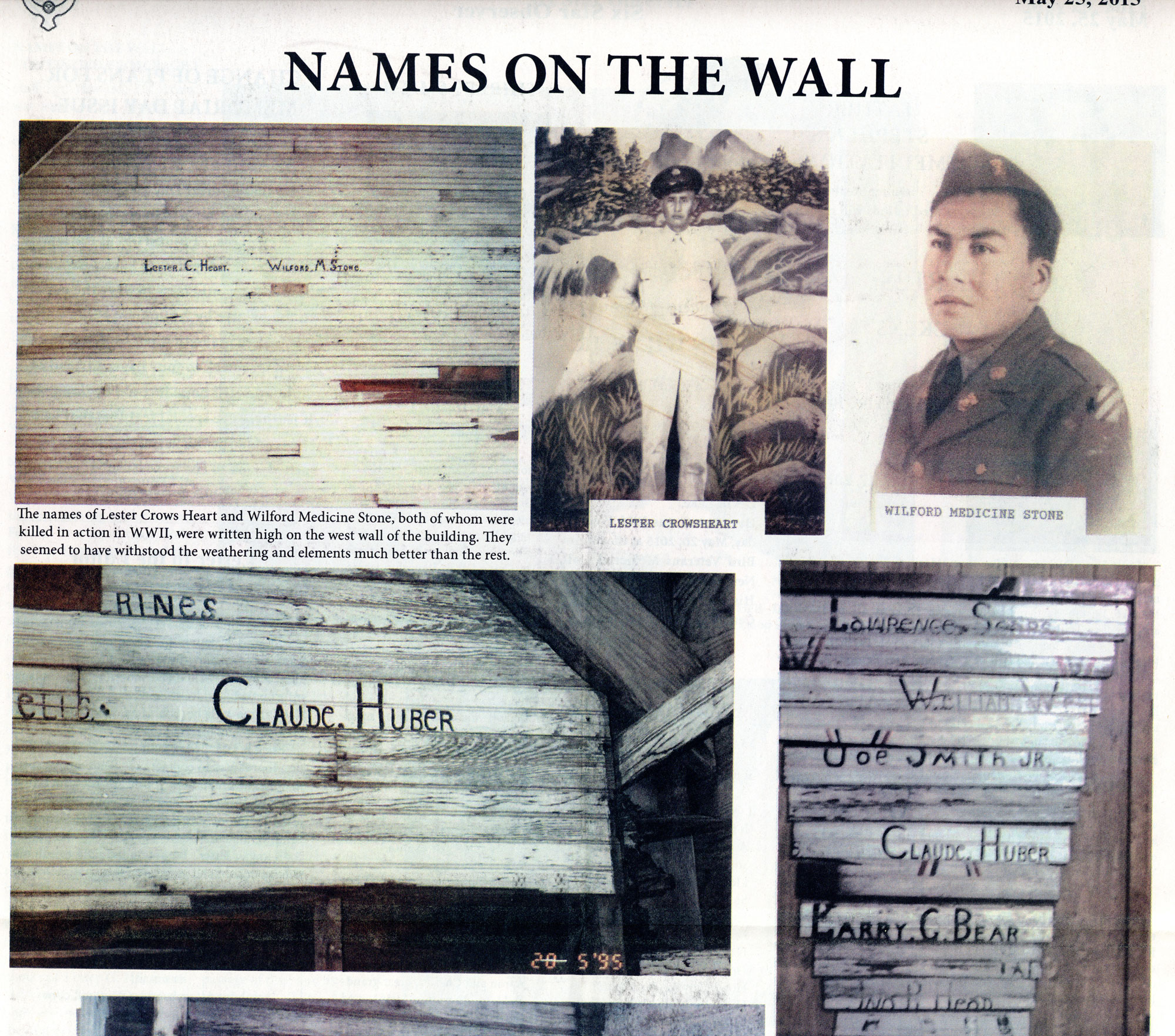
In this May 25, 2015, article from the Six Star Observer, Marilyn Hudson wrote about the names of World War II servicemen recorded in the Elbowoods Community Hall. Hudson, a prolific author, conducted extensive research for her published work. Both her sources and final articles are included in the collection.

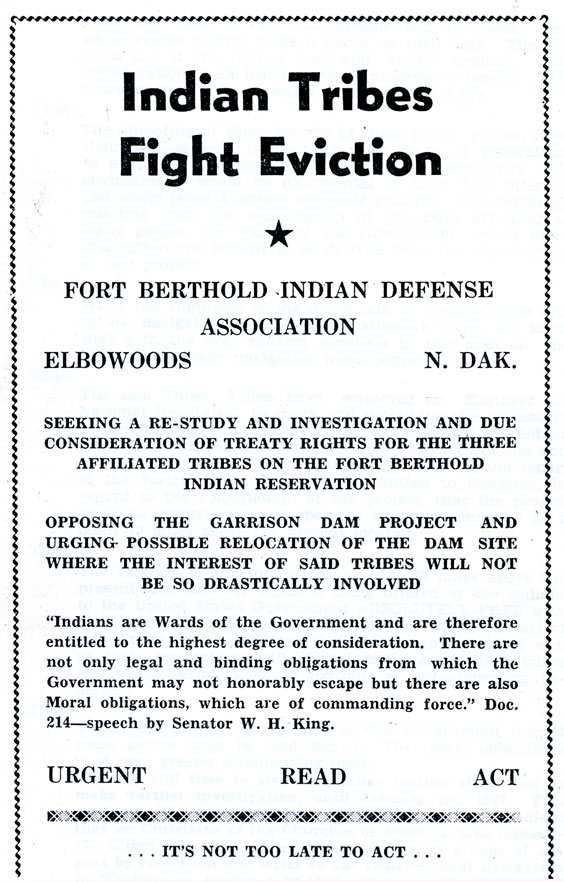
Central to the collection are records of tribal, state, and federal government proceedings related to the construction of the Garrison Dam and its impact on the MHA Nation. The collection chronicles all stages of the project, from initial planning to completion of the dam. Significantly, it documents a wide range of efforts to stop the project, which necessitated the flooding of homes and farms and the relocation of hundreds of families. After the dam’s completion, Hudson carefully recorded its long-term effects on the people of the Fort Berthold Reservation.

One of many documents in the Marilyn Cross Hudson Collection that preserves the record of Garrison Dam opposition, this booklet was produced by the Fort Berthold Indian Defense Association in 1946 to galvanize resistance and encourage further study. SHSND SA 11517-0001-040-00001

Hudson’s collection represents the most comprehensive series of tribal records at the State Archives and includes the correspondence and writings of Martin Cross, Marilyn’s father and long-time tribal chairman and council member. Bringing the historical documents to life are photographs, oral histories, and published articles by Hudson about life in the Missouri River bottomlands before the construction of the dam and after the flooding of the area.

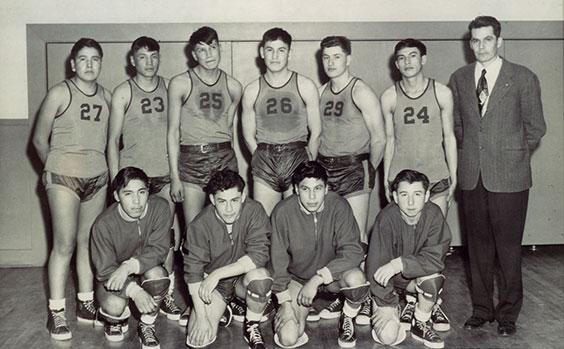
Among numerous topics, Hudson’s collection documents Elbowoods High School activities and student life, including the 1951 Elbowoods Warriors High School basketball team. Back row (left to right): Eldon Jones, Leander Smith, Larry Rush, Norman Baker, Arnold Charging, Tony Mandan, and Coach Richard Washington. Front row (left to right): Leroy Yellowbird, Leonard Eagle, Russell Gillette, and Evan Burr Jr. SHSND SA 11517-00009

Born in 1936 in Elbowoods, Hudson graduated from high school there in 1953. Her college education and professional career took her across the country until she accepted a position with the Bureau of Indian Affairs working at the Fort Berthold Agency and returned to North Dakota. Hudson retired from federal service in 1992 but stayed active in cultural and historic preservation as well as in the promotion of the state. She served as administrator for the Three Affiliated Tribes Museum in New Town and received the North Dakota State Historical Society’s Heritage Profile Honor Award in 2009. Hudson’s legacy in the state endures through her writings, organizational work, and the memories of those who had the privilege to know and work with her.

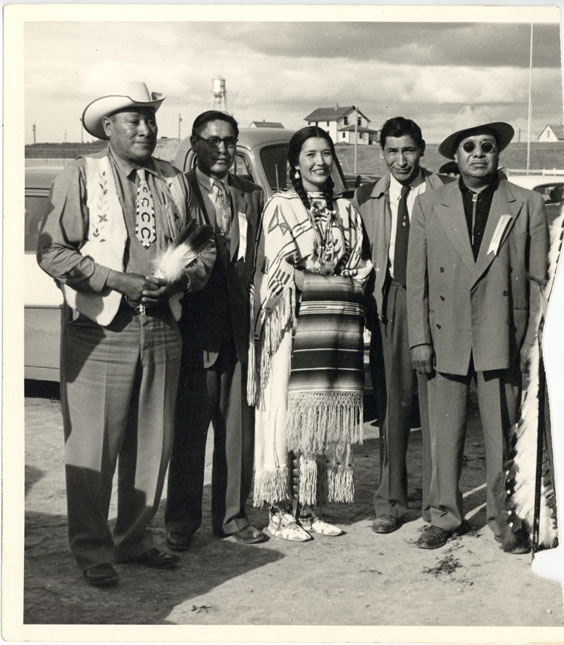
Hudson collected historical photographs as well as more modern images in her quest to document events for posterity. Pictured here on All-American Indian Day in New Town, North Dakota, are Martin Cross, Sam Meyers, and Mary Louise Defender. The two men on the far right are unidentified. SHSND SA 11517-00045

Hudson’s passion and love for the history of her people and state is reflected in the breadth of topics she researched and wrote about and in her meticulous gathering of primary and secondary sources. Her collection provides insight into the experiences and lives of members of the Three Affiliated Tribes and is an invaluable resource for current and future generations.

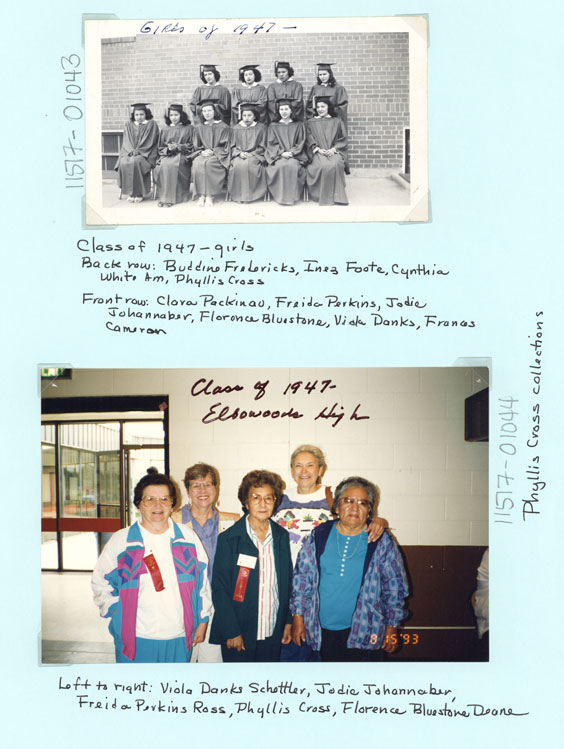
Members of Elbowoods High School’s Class of 1947 at their graduation (above) and at their 50-year reunion (below). Hudson thoroughly documented the people, places, and events in her collection to preserve history. SHSND SA 11517-01043-01044

The public can view the collection at the State Archives in the North Dakota Heritage Center & State Museum in Bismarck. For more information, contact us at archives@nd.gov.

Stories Collected by Archives Help Answer, “Why did people do that?!?”

This might be one of the most frequently visited questions in my household. Some examples: Why did Germans support Hitler when he was so terrible? Why did humans enslave other humans? Why did George Washington believe that bloodletting would get rid of his sore throat (it killed him)? Why were some women anti-suffrage? How was child labor justified during the Industrial Revolution? Why do fools fall in love?

There are many curious minds in my household, including a wide range in the ages of our kids and young adults. Despite (or because?) of this broad span of perspective, these “why” questions come up a lot.

When they do, the easiest solution is to check my phone; but the easiest solution might not be the best. There are fascinating videos online about the algorithms Google and other search engines use to produce top results when you ask “Hey, Google” or “Alexa. …” But--are the top results accurate? Paid for? Unbiased? Politicized? Do Google results tell you correct answers?

In addition to questions of the reliability of search engine results, it is easy to get lost in a rabbit hole of responses, chats, debates and “expert” answers online without ever coming up with a solid answer.

As an archivist and lifelong learner of history, I am especially grateful during those “why” times that archives, libraries and museums exist. Because of the work of these fields and members of the public who contribute to them, we have access to answers to some of our most burning “why” questions.

Archives (and other cultural heritage institutions) and their supporters are a partnership: Archives could not preserve and provide access to human history without members of the public who see the current and future value in the movies, photos, book, documents and artifacts they donate to public institutions. Simply put, private archives would not exist without donations of important historic materials from their constituents.

The more we save, the more data we will have to interpret in the future. We will have a greater firsthand spectrum of the human experience and reasons for why people did that. If we rely only on published sources to tell our stories, we might miss out on the unique perspectives and voices that make us interesting as a species. Like anything else, published sources are a product of their times, and are written through the socio-political lens of writers and editors, biases and all. Firsthand accounts can provide raw data that can be analyzed and interpreted across time and cultures.

I’m not sure whether other generations anticipated these “why” questions. Based on the records they preserved, I think that many did.

I often wonder how future generations will view our time. In this “information age” there will likely be a ton of information for them to sift through. However, as in the case of search engine results, quantity does not always equal quality: How much of the available information will be by the people who lived it? If my great-grandchildren ask how we felt during COVID-19, what it was like to go to fourth grade during a pandemic, or why wearing masks was politicized, will they get their answers from a news site (which we know often report differently based on political affiliation)? Will they read comment threads on Facebook? Will they watch news clips of the various responses of political leaders?

Maybe it’s my bias, but my hope is that future generations will have access to read/hear/watch the voices of the many who experience an event like COVID-19 firsthand. The best way to do that is to start documenting daily experiences, even if they seem trivial or mundane. It is the experiences of daily life that future generations will relish for their authenticity and rely on to answer their own “why” questions, whatever they may be.

I think there is a misconception that you have to be a George Washington to be preserved in archives. This couldn’t be further from the truth. This idea prevents people from documenting their lives and experiences, which are the building blocks of history, the keys to understanding life and events of the past. The more voices that are available, the better understanding that future generations have of our time. I’ve included two examples below of materials that could be collected by the State Archives: records that my family kept during COVID-19 and a collection of newspaper clippings about the coronavirus pandemic that were collected and donated to the Archives by a North Dakota resident.

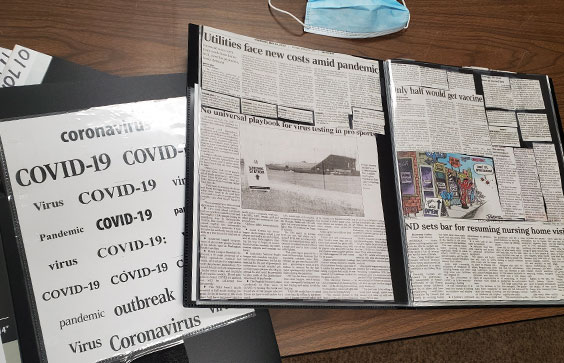
Covid-19 Newspaper clippings

Coronavirus pandemic-related news clippings from a variety of sources that will be a resource for future researchers about North Dakota history (MSS 11450).

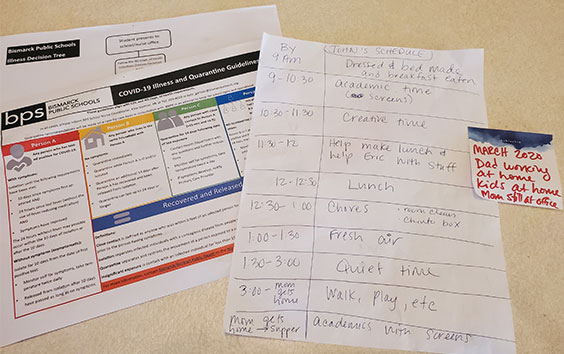
COVID-19 Documents

My family’s schedule for our 9-year-old son during the early stages of COVID-19 in North Dakota.

If you are interested in donating your stories related to COVID, please use this link. We all play a part in preserving today to answer the “why” questions of tomorrow.

Inventor John D. Kirschmann: Part I

In June 2019, the North Dakota State Archives received the papers of inventor John D. Kirschmann. For many Midwesterners, the name Kirschmann is instantly recognizable because of the agricultural machinery and products he developed and distributed. For others, like myself (who grew up in a city), the name may be new. As I worked on the Kirschmann papers, I increasingly understood the significance of the technological advancements he facilitated. I also recognized that the agricultural piece is one of many elements in a story of an entrepreneurial genius whose curiosity led directly to improvements in the lives of farmers and city dwellers alike.

Kirschmann was so prolific that his story will require several entries. This first blog post is the beginning of his story...

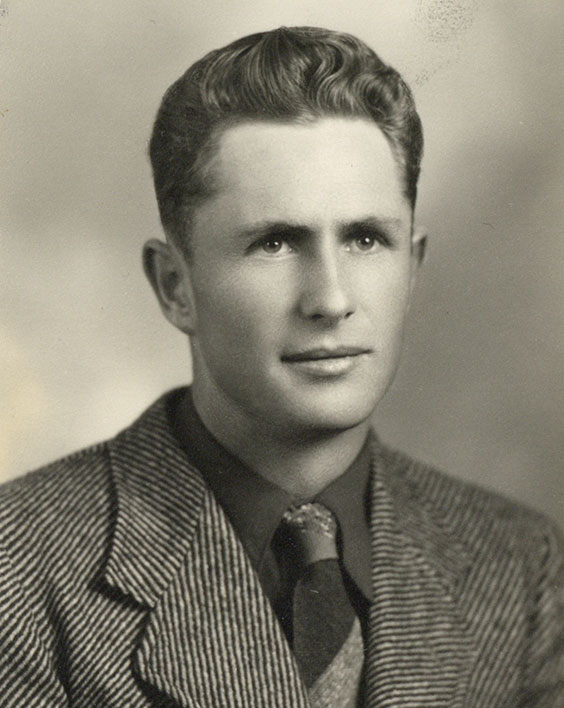
Portrait of John Kirschmann

John D. Kirschmann, circa 1941 (11400-00002)

John D. Kirschmann was born and raised in a German-speaking household in Regent, North Dakota, where he attended school until the fifth grade. He struggled in the classroom because of the language barrier, and later noted that he received his basic education from his father in German.

Kirschmann learned best by experimentation and asking questions: an inquisitive child, John sought to understand how things worked so that he could rework and improve them. By age 10, he was able to operate any implement needed to prepare a field for planting, and as a teenager began experimenting with improvements to existing farm machinery. This led to the development of his own machines, which were initially built from scrap metal and used parts.

During his youth, Kirschmann was an active hunter, selling pelts of rabbits, weasels, badgers, and skunks for seed money to start new enterprises. One early business was a turkey ranch that he established and operated while also working for his father.

As a teenager, Kirschmann was already a master at recognizing a need or a problem and constructing solutions from minimal resources. He invented a trip-back scraper to clean between the lugs of a tractor, which he manufactured from scrap iron and sold to neighbors. He also built a water pumping device to irrigate several acres of garden that his father let him develop. To construct the pump and trough, Kirschmann used old tractor pistons, cylinders, and one-gallon oil cans. This invention successfully brought water from a nearby lake, crossed a road, and irrigated the garden without use of solder, glue, cement, or pipe.

As he neared adulthood and prepared to go off on his own, Kirschmann fixed up junk grain drills and resold them. He used that money to buy more parts, from which he built a tractor. With that tractor he raked the neighbors’ thistles, and by the end of the season, had purchased an IHC Farmall tractor. The following year, in 1941, he received 320 acres of land his father had purchased. The land was full of weeds and had not been plowed or farmed. John plowed half of it, planted wheat, and had a great yield that year.

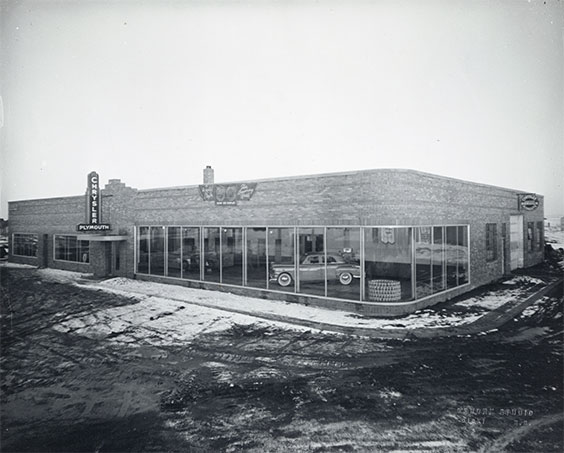
As the years continued, Kirschmann acquired farm land and businesses, becoming an Oliver Machinery Dealer and a Chrysler Plymouth dealer in Regent. In establishing the Plymouth dealership, Kirschmann was the architect and construction supervisor. He invented a bricklaying machine to speed up the process after the bricklayer quit. In a few years, when the Oliver self-propelled combine came out, Kirschmann Motors sold more than any other Oliver dealer in the United States.

Exterior of Chrysler dealershp with a car visible through the window

Kirschmann Chrysler Plymouth Dealership, Regent, ND (11400-00004)

Kirschmann’s resourcefulness extended beyond his business career into his personal life. During World War II, while the family remained on the farm, John moved into Regent. He needed a home and decided to build one out of materials that did not require a permit. He acquired and constructed his home entirely out of 40” x 40” sheets of glass, 4” strips of oak flooring, ½” thick plywood, a few nails, and brass screws. He then constructed five Federal Housing Administration homes for the garage and farm workers. One of the five homes was a brick house laid by the machine Kirschmann had developed to construct his dealership. Examiners and residents were astonished by the workmanship of the home and how accurately the bricks were laid (they did not know about the machine). The bricklayer in Regent was speechless after the machine was used to construct a large, five-bedroom ranch home for the Kirschmann family in Regent.

If you are interested in learning more, look for the next installment in this series this fall.

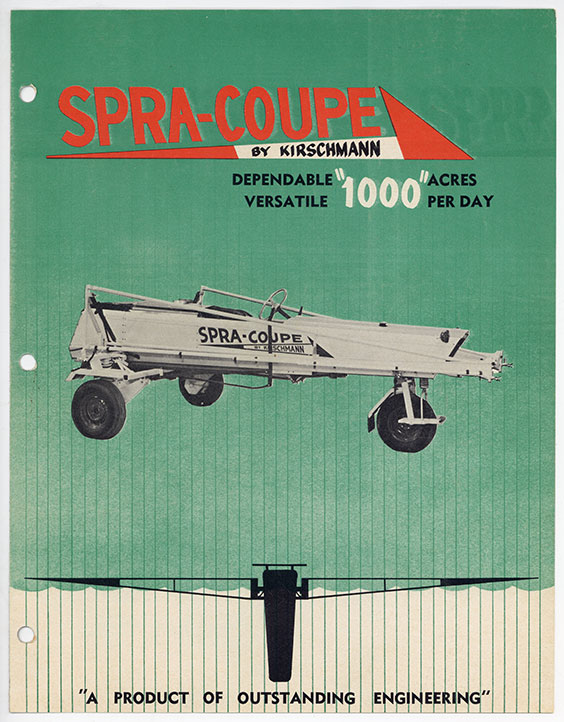
Spra-Coupe by Kirschmann advertisement

Advertisement for Kirschmann’s “Spra-Coupe.” Look for more information on this invention and its impact on North Dakota in the next blog installment. (11400)